
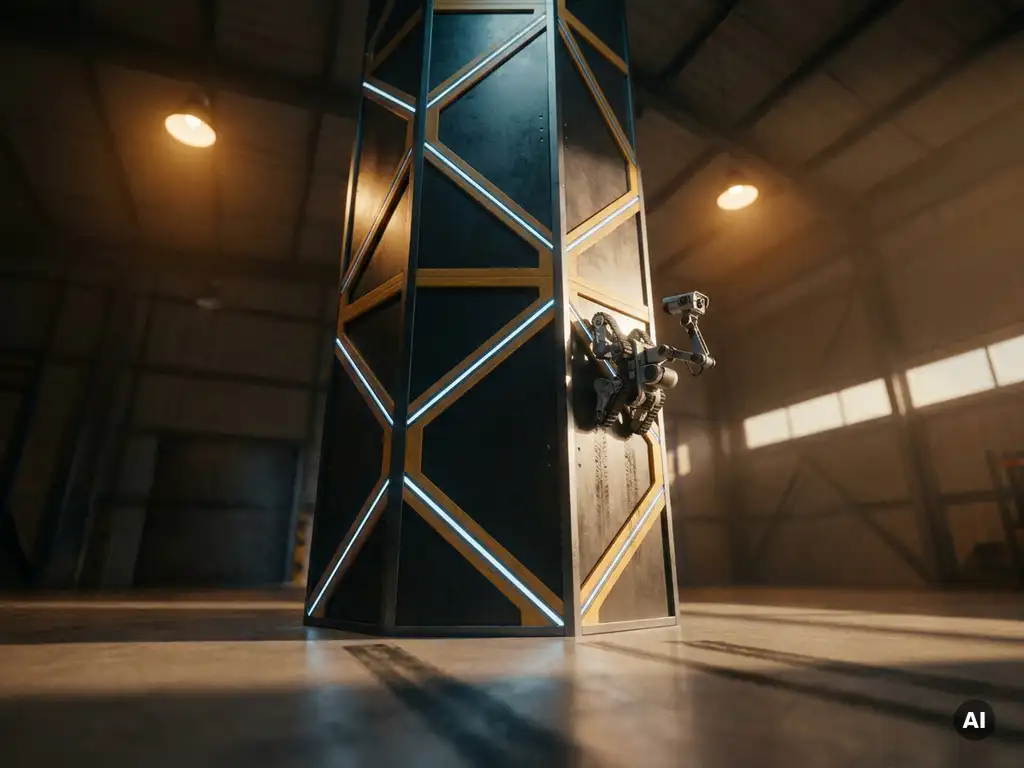
You future-proof a warehouse automation investment by choosing a system architecture that separates capacity from throughput, requires no structural redesign to scale, and integrates with existing software without vendor lock-in. The key is selecting technology that grows with your operation rather than forcing a rebuild every time your requirements change. The questions below unpack each dimension of that decision in detail.
What makes a warehouse automation system truly scalable?
A warehouse automation system is truly scalable when capacity and throughput can grow independently of each other, without requiring mechanical redesign or infrastructure duplication. Most conventional systems tie these two dimensions together, meaning that adding storage locations forces changes to the throughput equipment, and vice versa. Real scalability means extending one without touching the other.
In practice, this distinction matters enormously over a ten-year investment horizon. Traditional AS/RS architectures, including mini-load cranes and shuttle systems, are built around centralized lifting or conveying cores. When you reach the throughput ceiling of that core equipment, you cannot simply add performance; you must rebuild or duplicate the infrastructure. That drives cost, causes downtime, and introduces complexity that compounds over time.
Genuinely scalable modular warehouse automation separates these concerns at the architectural level. Storage capacity grows by extending the physical structure, adding towers or locations. Throughput grows by deploying additional autonomous robots operating in parallel within the same grid. Neither action requires the other, and neither requires stopping the operation. This kind of independent scalability is the foundational test any future-proof warehouse automation investment should pass before procurement begins.
How do you evaluate flexibility when choosing an AS/RS?
When evaluating flexibility in an automated storage and retrieval system, the most important criteria are relocatability, reconfigurability, and the absence of single points of failure. A flexible AS/RS adapts to changes in building layout, SKU mix, order profile, and throughput demand without requiring a full system replacement or significant re-engineering.
There are several concrete questions worth asking during evaluation:
- Can the system be physically relocated if the warehouse moves or consolidates?
- Does adding storage capacity require shutting down operations?
- Is every storage location directly accessible, or does retrieval require reshuffling inventory?
- What happens to throughput if a robot or mechanical component fails?
- Can the system handle a wide range of SKU types and tote configurations without hardware changes?
Direct access to every storage location is a particularly undervalued flexibility indicator. Systems that require digging through inventory to retrieve a specific tote introduce latency that compounds as SKU counts grow. In contrast, architectures where every location is independently reachable maintain consistent retrieval times regardless of inventory depth or order complexity. This matters most in high-mix environments like e-commerce, spare parts, and pharmaceutical fulfillment, where order profiles change frequently and unpredictably.
What role does software integration play in long-term automation ROI?
Software integration is one of the most significant factors in long-term warehouse automation ROI because it determines how easily the system adapts to new warehouse management platforms, ERP systems, and operational workflows over time. A technically capable AS/RS that cannot communicate cleanly with external systems creates ongoing integration debt that erodes the original business case.
The practical risk is vendor lock-in. If a system relies on proprietary communication protocols or requires bespoke middleware to connect with standard WMS platforms, every software upgrade or system migration becomes a costly engineering project. Over a ten-year horizon, the cumulative cost of that friction often rivals the original capital expenditure.
Systems that expose standard APIs and support common integration frameworks reduce this risk substantially. The control layer should handle robot coordination, inventory logic, and safety internally, while presenting a clean, documented interface to external systems. This separation allows the warehouse software stack to evolve, whether that means adopting a new WMS, connecting to an ERP, or integrating with an order management system, without touching the physical automation layer. When evaluating scalable AS/RS options, the software architecture deserves as much scrutiny as the mechanical design.
Which warehouse automation technologies age best over a 10-year horizon?
Warehouse automation technologies that age best over a ten-year horizon share three characteristics: distributed operation without centralized failure points, passive or low-complexity physical infrastructure, and software-driven performance improvements that do not require hardware changes. Technologies built around these principles continue delivering value as operational demands shift, rather than becoming constraints.
Technologies with strong longevity
Autonomous mobile robot systems and grid-based robotic AS/RS platforms tend to age well because their performance envelope can be expanded by adding robot units rather than replacing structural components. When the robots themselves improve through software updates or hardware generations, they can often be swapped into the existing grid without rebuilding the storage structure. The physical infrastructure becomes a long-lived asset, and the intelligence layer evolves independently.
Technologies that tend to create obsolescence risk
Crane-based systems and fixed-conveyor architectures carry higher obsolescence risk because their throughput ceiling is determined by the mechanical capacity of centralized equipment. Once that ceiling is reached, the only path forward is structural modification. Similarly, systems with embedded electronics, motors, or power distribution inside the rack structure accumulate maintenance complexity over time and become harder to service as components age or are discontinued by suppliers.
The general principle for future-proof warehouse automation is to minimize the complexity embedded in passive infrastructure and concentrate intelligence in components that can be updated, replaced, or scaled independently.
How do energy and maintenance requirements affect automation investment longevity?
Energy and maintenance requirements directly affect automation investment longevity by determining the total cost of ownership over the system’s operating life, not just the initial capital outlay. A system with low upfront cost but high ongoing energy draw or frequent maintenance interventions can become more expensive than a higher-CAPEX alternative within three to five years of operation.
In-rack electrification is one of the clearest maintenance risk factors in traditional AS/RS design. When power distribution, motors, and sensors are embedded throughout the rack structure, every component becomes a potential failure point that is difficult and expensive to access. Over time, cabling degrades, connectors corrode, and firmware versions diverge, creating a maintenance burden that grows with the age of the system.
Architectures that eliminate in-rack electrification by concentrating all active components in the robots themselves present a fundamentally different maintenance profile. When a robot requires service, it is removed and replaced or repaired as a discrete unit. The storage structure remains passive steel with no embedded failure modes. This approach also simplifies fire safety compliance and reduces the energy infrastructure required to operate the system, both of which have measurable effects on long-term operating costs.
Charging robots during operation rather than in dedicated charging stations is another efficiency factor worth evaluating. Systems that handle charging in-process eliminate the throughput loss associated with robots cycling out of service for battery replenishment, which has a direct effect on the effective capacity of the system over time.
When should a company expand its automated storage system versus replace it?
A company should expand its automated storage system when the existing architecture can absorb additional capacity or throughput without structural redesign, and replace it when reaching performance targets requires rebuilding core infrastructure. The decision point is essentially an architectural test: can the system grow, or has it reached a structural ceiling?
Expansion is the right answer when the following conditions are met:
- Storage capacity can be added by extending the physical structure without modifying existing sections
- Throughput can be increased by deploying additional robots without adding centralized lifting or conveying equipment
- The control system can manage a larger fleet and more locations without a platform migration
- The expansion can happen during live operations without a full shutdown
Replacement becomes necessary when the system’s core architecture prevents independent scaling. If adding throughput requires duplicating cranes or conveyors, if storage growth requires redesigning the structural grid, or if the control system cannot handle increased complexity without a full upgrade, the marginal cost of expansion approaches or exceeds the cost of a modern replacement.
The most common trigger for premature replacement is a system that was never designed for independent scalability. When capacity and throughput are architecturally linked, every growth decision forces a choice between underinvesting in performance or overinvesting in structure. Systems designed from the outset to scale these dimensions independently avoid this trap, and that design choice is one of the strongest arguments for evaluating modular warehouse automation before committing to a conventional AS/RS platform.
How Hexxabotics helps future-proof your warehouse automation investment
Hexxabotics is built specifically to address the scalability, flexibility, and longevity challenges covered throughout this article. The system is designed so that every dimension of long-term automation value is preserved from day one:
- Independent scalability: Storage capacity grows by adding hexagonal towers; throughput grows by adding Hexxabots. Neither requires the other, and neither requires stopping operations.
- No in-rack electrification: The rack structure is passive steel with no embedded motors, cabling, or sensors, eliminating the maintenance complexity that ages conventional systems prematurely.
- 100% direct access: Every tote location is directly reachable without reshuffling, maintaining consistent retrieval performance as SKU counts and order complexity grow.
- Distributed resilience: No centralized crane or conveying core means no single point of failure. If one robot stops, the rest of the system continues operating at stable throughput.
- Standard API integration: The Hexxabotics Control System connects to external WMS and ERP platforms through standard interfaces, protecting your software investment as systems evolve.
- Relocatable architecture: The modular structure can be reconfigured or relocated when operational requirements change, extending the asset life beyond a single facility.
If you are evaluating warehouse robotics ROI and want to understand how a scalable AS/RS fits your specific operational requirements, learn more about Hexxabotics or explore the full system to start the conversation.
Related Articles
- Wat is de impact van vloerebvlakheid op geautomatiseerde magazijnsystemen?
- Hoe verbetert computer vision de kwaliteitscontrole in geautomatiseerde magazijnen?
- Hoe werkt fleetmanagement voor magazijnrobots?
- Wat is autonome vorkheftrucktechnologie en hoe betrouwbaar is het?
- Hoe lang duurt het om een AS/RS-systeem te implementeren?