
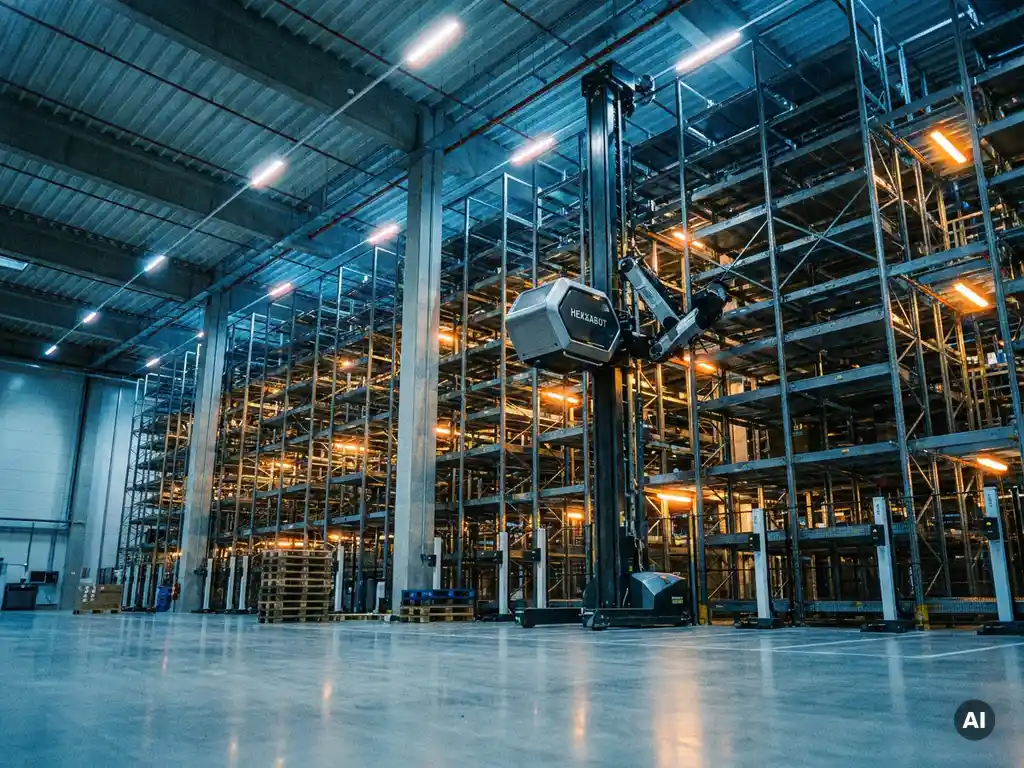
Most AS/RS implementations take between 6 and 18 months from project kickoff to go-live, depending on system size, site complexity, and integration requirements. Smaller, modular systems in prepared facilities can reach operational status faster, while large-scale greenfield deployments with full WMS integration naturally require more time. The sections below break down the key variables that shape your actual deployment timeline.
What factors most affect AS/RS implementation timelines?
The single biggest driver of AS/RS implementation time is system complexity, specifically the combination of physical scale, software integration depth, and site readiness. A compact, modular system installed in a facility with existing infrastructure and a straightforward WMS connection can be operational in a matter of months. A large, highly customized system going into a site that requires civil works and deep ERP integration may take well over a year.
Beyond scale, the following factors consistently shape how long an automated storage and retrieval system installation takes:
- Site preparation: Floor levelness, ceiling height, fire suppression systems, and power supply readiness all affect how quickly physical installation can begin.
- System architecture: Modular, self-supporting structures require less civil engineering than traditional high-bay racking, which compresses the construction phase.
- Number of SKUs and tote migration: Migrating existing inventory into standardized totes and populating the system adds time proportional to catalog size.
- Software configuration: The control system, inventory logic, and API connections to external platforms all need to be configured, tested, and validated before go-live.
- Supplier lead times: Hardware components, particularly custom structural elements and robotic units, have procurement lead times that must be factored into the overall schedule.
- Operator training: Staff need time to understand system behavior, safety protocols, and exception handling before the system can run at full capacity.
Systems built on a reusable architectural framework reduce engineering effort significantly. When the structural logic is consistent across deployments, integrators can apply proven configurations rather than re-engineering from scratch, which shortens both design and commissioning phases.
How long does a typical AS/RS installation take from start to finish?
A typical AS/RS deployment timeline runs from 9 to 15 months for mid-sized installations, covering everything from detailed engineering through commissioning and ramp-up. Smaller modular systems in well-prepared facilities can reach go-live in 6 months. Large-scale, multi-zone systems with complex integrations may extend to 18 months or beyond.
Breaking the process into phases gives a clearer picture of where time is spent:
- Engineering and design (1 to 3 months): System layout, structural specifications, software architecture, and interface design are finalized. Modular systems with standardized geometry reduce this phase considerably.
- Procurement and manufacturing (2 to 4 months): Structural components, robotic units, and control hardware are manufactured and delivered. Lead times vary by supplier and order volume.
- Civil and site preparation (1 to 3 months, overlapping with procurement): Floor preparation, utility connections, and safety infrastructure are completed. This phase runs in parallel with manufacturing to avoid schedule gaps.
- Mechanical installation (1 to 3 months): The storage structure is assembled, robotic units are deployed, and workstations are installed. Systems without in-rack electrification are faster to install because there is no cabling infrastructure to run through the structure.
- Software commissioning and integration testing (1 to 2 months): The control system is configured, WMS or ERP connections are tested, and robot coordination logic is validated under simulated conditions.
- Ramp-up and go-live (2 to 4 weeks): Inventory is loaded, operators are trained, and throughput is gradually increased to operational targets.
The phases above frequently overlap. Procurement typically begins while engineering is still being finalized, and site preparation runs alongside manufacturing. Effective project management of these parallel tracks is one of the most practical ways to compress the overall AS/RS deployment timeline.
What’s the difference between greenfield and brownfield AS/RS deployment times?
Greenfield deployments, where a new facility is built or a fully empty space is fitted out, typically take longer overall but offer more scheduling control. Brownfield deployments, where the system is installed inside an operating warehouse, are often faster in terms of the installation phase itself but introduce operational constraints that can add complexity and delay.
Greenfield AS/RS deployment
In a greenfield environment, the site is purpose-designed around the automation system. Floor specifications, ceiling heights, power infrastructure, and fire suppression can all be optimized from the start. This reduces rework and avoids the compromises that come with adapting to an existing building. The trade-off is that construction of the facility itself must be completed before installation begins, which adds months to the total project duration. However, the installation phase itself tends to be cleaner and faster because there are no operational constraints on when and where work can happen.
Brownfield AS/RS deployment
Brownfield installations involve fitting automation into a facility that is already in use. The physical installation must often be phased around live operations, which means working in sections, maintaining access for existing workflows, and sometimes running manual and automated processes in parallel during transition. This staged approach protects business continuity but extends the installation timeline. Floor conditions, existing racking, and infrastructure limitations may also require remediation work before the AS/RS structure can be installed.
Modular systems with a self-supporting structure and no requirement for in-rack electrification have a practical advantage in brownfield settings. Because the structure does not depend on the building’s infrastructure for power distribution, installation can proceed section by section without major disruption to adjacent operations.
How does AS/RS integration with WMS or ERP affect go-live timing?
WMS and ERP integration is one of the most common sources of schedule delays in warehouse automation implementation. Integration complexity depends on the maturity of the existing platform, the quality of available APIs, and how much custom logic needs to be built to align the AS/RS control system with the host system’s inventory and order management rules.
Standard API-based integrations between modern WMS platforms and AS/RS control systems are relatively straightforward when both sides support well-documented interfaces. In these cases, integration testing can be completed within a few weeks. The more common challenge arises when the host WMS is an older or heavily customized system that requires bespoke middleware, data mapping, or workflow reconfiguration.
Several integration-related factors consistently affect go-live timing:
- API readiness: Systems that offer standard, well-documented APIs reduce the development effort required on both sides of the connection.
- Data quality: Incomplete or inconsistent inventory master data in the existing WMS must be cleaned before it can be used to populate the AS/RS.
- Test environment availability: Integration testing requires a stable test environment from the WMS side, which is not always available on short notice.
- Change management: Staff who manage inventory in the WMS need to understand how the AS/RS control system interacts with existing workflows, which requires training time.
Starting integration planning early, ideally during the engineering phase rather than after mechanical installation is complete, is the most effective way to prevent software delays from holding up a system that is otherwise ready to operate.
Can an AS/RS system be expanded without restarting the implementation process?
Yes. Modern modular AS/RS systems are designed to be expanded incrementally without requiring a full re-implementation. Storage capacity and throughput can be increased independently by adding structural sections or deploying additional robotic units, and these expansions can happen while the existing system continues to operate.
This is a meaningful departure from traditional AS/RS architectures, where scaling often requires structural changes to the core equipment, additional conveying infrastructure, or reconfiguration of the central lifting mechanism. In those systems, expansion is effectively a new implementation project with its own engineering, downtime, and commissioning requirements.
In a well-designed modular system, the expansion process looks more like a controlled extension than a restart:
- Adding storage locations: New tower sections are assembled adjacent to or on top of the existing structure. Because the architecture uses a consistent geometric logic, no custom engineering is needed for each expansion.
- Adding throughput: Additional robotic units are deployed into the existing grid. The control system recognizes new units and distributes work across them automatically, increasing throughput linearly without infrastructure changes.
- Software updates: The control system is updated to reflect the new storage map and robot fleet. This is a configuration task, not a re-integration project.
The ability to scale capacity and throughput independently is particularly valuable for operations with seasonal demand peaks or growth trajectories that are difficult to predict at the time of initial installation. Rather than over-investing in capacity upfront, companies can right-size the initial deployment and expand as demand justifies it, without disrupting daily operations.
How Hexxabotics helps with AS/RS implementation
Hexxabotics is built specifically to address the factors that make warehouse automation implementation slow, rigid, and expensive to scale. The system’s modular hexagonal architecture, autonomous Hexxabots, and standardized totes combine into a deployment model that is faster to install, easier to integrate, and simpler to expand than conventional AS/RS solutions.
- Faster installation: No in-rack electrification means no cabling infrastructure to run through the structure, compressing the mechanical installation phase.
- Reduced engineering effort: A consistent architectural logic across projects means integrators apply proven configurations rather than re-engineering from scratch.
- Standard API integration: The Hexxabotics Control System connects to external WMS and ERP platforms through standard interfaces, reducing integration development time.
- Scalable without downtime: Storage capacity and throughput scale independently. Adding locations or robots does not require stopping operations or redesigning infrastructure.
- Brownfield-ready: The self-supporting structure with no dependency on in-rack power makes phased installation in live facilities practical.
If you are evaluating AS/RS deployment timelines for an upcoming project, explore the Hexxabotics system to see how its architecture can reduce your time to go-live and keep future expansions on your terms.