
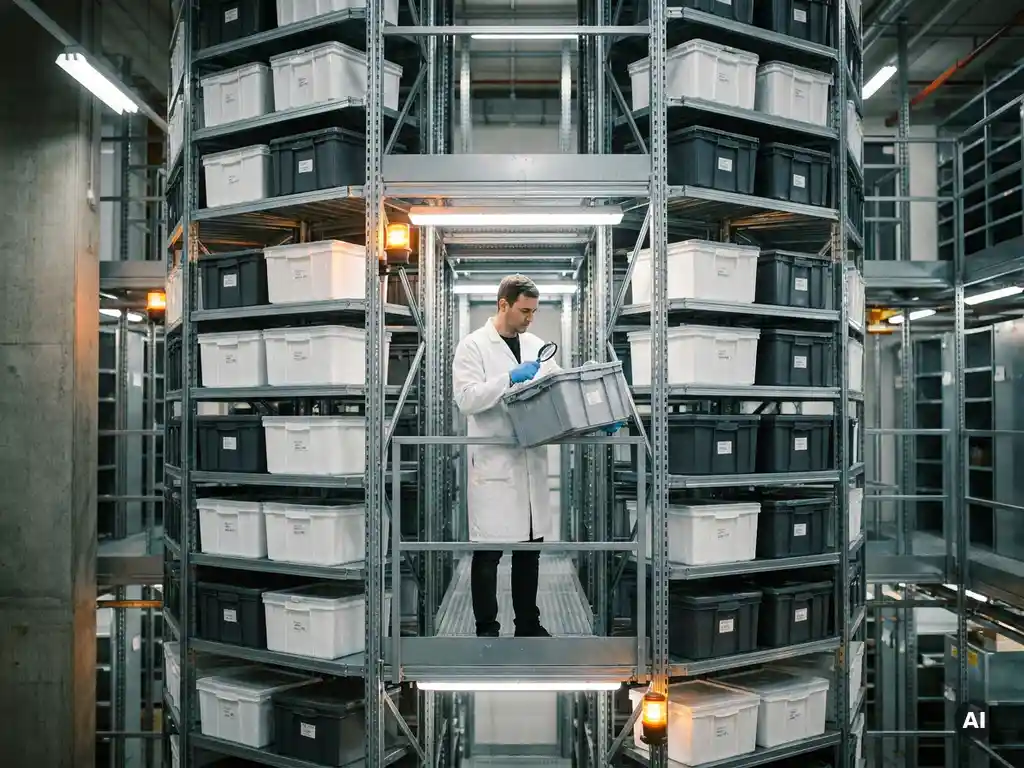
Training warehouse staff on pharmaceutical compliance requires a structured program that covers regulatory frameworks, storage conditions, documentation practices, batch traceability, and hygiene standards, delivered through a combination of formal instruction, hands-on practice, and regular reassessment. Compliance in pharmaceutical warehousing is not a one-time event; it is an ongoing operational discipline that must be embedded into daily routines and verified through documented evidence. The sections below answer the most common questions operations and engineering teams ask when building or refreshing a pharma warehouse training program.
What pharmaceutical regulations apply to warehouse operations?
Pharmaceutical warehouse operations are primarily governed by Good Distribution Practice (GDP) guidelines, which set out the conditions under which medicinal products must be stored, transported, and handled. In the European Union, the current framework is the EU GDP Guidelines 2013/C 343/01. In the United Kingdom, the Medicines and Healthcare products Regulatory Agency (MHRA) publishes its own GDP guidance. In the United States, the Drug Supply Chain Security Act (DSCSA) and FDA Current Good Manufacturing Practice (cGMP) regulations apply depending on the product and operation type.
Beyond these headline frameworks, several additional regulations and directives shape day-to-day warehouse compliance:
- Falsified Medicines Directive (FMD) / Delegated Regulation (EU) 2016/161: Requires serialization verification and decommissioning of unique identifiers at the point of supply for prescription medicines.
- Temperature and environmental controls: Products must be stored within defined temperature ranges, and monitoring records must be maintained and available for inspection.
- Controlled drug legislation: Narcotics and psychotropic substances are subject to additional national-level security and record-keeping requirements.
- Batch and lot traceability requirements: Regulators expect full traceability from receipt through to dispatch, with records that can be retrieved rapidly during an audit or recall.
Understanding which regulations apply to your specific operation depends on the product categories you handle, the countries you supply, and whether your facility holds a Wholesale Dealer Authorisation (WDA) or equivalent license. Compliance training must be anchored to the specific regulatory obligations of the operation, not to a generic interpretation of pharmaceutical rules.
What topics must pharmaceutical warehouse compliance training cover?
Pharmaceutical warehouse compliance training must cover GDP principles, temperature and environmental monitoring, batch and expiry management, documentation and record-keeping, falsified medicines verification, hygiene and contamination prevention, and the correct handling of returns, recalls, and suspected counterfeits. Each topic connects directly to regulatory obligations and operational risk.
A well-designed curriculum addresses the following core areas in depth:
Regulatory framework and quality system
Staff need a working understanding of why GDP exists, what a Wholesale Dealer Authorisation requires, and how their individual role contributes to the quality system. This does not mean memorizing legislation verbatim, but it does mean understanding the consequences of non-compliance for patients, the business, and the license holder.
Storage conditions and environmental monitoring
Correct storage temperatures, humidity ranges, and light conditions must be understood for the product categories held. Staff should know how to read monitoring equipment, recognize an out-of-range excursion, and follow the escalation procedure when one occurs. Ambient, refrigerated (2-8 degrees Celsius), and frozen storage each carry distinct handling requirements.
Batch traceability, FEFO, and expiry management
First Expired First Out (FEFO) is the standard inventory rotation principle in pharmaceutical warehousing. Staff must understand how to identify batch numbers and expiry dates, how the warehouse management system enforces FEFO, and what to do when a product approaching expiry is identified. Accurate batch traceability underpins both regulatory compliance and the ability to execute a targeted product recall.
Documentation and record-keeping
GDP requires that activities are documented at the time they occur. Training must cover how to complete receiving records, discrepancy reports, temperature excursion logs, and dispatch documentation accurately and legibly. Electronic records must meet the same standards as paper records, including audit trail requirements.
Falsified medicines and FMD verification
Where the Falsified Medicines Directive applies, staff must understand the verification and decommissioning process, recognize the tamper-evident features on pharmaceutical packaging, and know how to report a suspected falsified product.
Returns, rejections, and recalls
Returned pharmaceutical products cannot simply be returned to saleable stock without a formal assessment. Training must cover the quarantine process, the criteria for assessing whether a return is fit for resale, and the procedure for executing a product recall or withdrawal efficiently and completely.
How do you structure a pharma warehouse training program?
A pharmaceutical warehouse training program should be structured in three phases: induction training for new staff, role-specific technical training tied to job function, and ongoing refresher and competency reassessment. Each phase builds on the previous one and is supported by documented records that demonstrate completion and understanding.
The induction phase introduces all new warehouse employees to the regulatory environment, the quality system, and the facility’s standard operating procedures (SOPs) before they begin unsupervised work. This phase should be completed and signed off before an individual handles pharmaceutical product independently.
Role-specific training then goes deeper into the tasks that individual performs. A goods-in operative needs detailed training on receipt verification, quarantine procedures, and temperature monitoring. A pick-and-pack operative needs training on FEFO, batch selection, FMD scanning, and packaging integrity. A supervisor needs training on exception handling, escalation, and documentation oversight. Mapping training requirements to job roles ensures that the program is proportionate and that critical knowledge reaches the people who need it.
Ongoing training maintains competency as regulations change, new products are introduced, or system updates alter workflows. A documented training matrix that tracks each employee’s training history, the version of the SOP they were trained to, and their next scheduled reassessment date provides the foundation for demonstrating a living, maintained program to an inspector.
What training methods work best for pharmaceutical compliance?
The most effective pharmaceutical compliance training combines structured classroom or e-learning instruction with supervised on-the-job practice and competency assessment. No single method is sufficient on its own; regulators expect evidence that staff can apply knowledge in practice, not just pass a written test.
Classroom instruction and e-learning modules are well suited to regulatory context, quality system principles, and procedural knowledge. E-learning platforms allow organizations to deliver consistent content across multiple sites, track completion automatically, and update materials when SOPs change. However, digital training alone does not demonstrate operational competency.
Supervised practical training, where a new operative performs tasks alongside an experienced colleague before working independently, bridges the gap between theoretical knowledge and real-world application. This is particularly important for tasks such as temperature monitoring, FMD scanning, and handling of rejected or returned stock, where errors carry direct regulatory consequences.
Competency assessment, whether through written tests, observed task performance, or structured questioning, provides documented evidence that the individual has understood and can apply their training. GDP inspectors routinely speak directly to warehouse operatives during site visits; an employee who can explain why FEFO matters and what they would do if they found an expired product on the shelf demonstrates a genuine quality culture, not just a paper trail.
Scenario-based learning, where staff work through realistic situations such as a temperature excursion, a suspected falsified product, or a recall notification, builds confidence and decision-making capability in conditions that matter. This approach is particularly effective for supervisors and team leaders who must manage exceptions under time pressure.
How often should pharmaceutical warehouse staff be retrained?
Pharmaceutical warehouse staff should receive refresher training at least annually, and additionally whenever an SOP is updated, a new product category is introduced, a regulatory change takes effect, or an audit finding or deviation identifies a knowledge gap. Annual retraining is a minimum expectation under GDP; it is not a ceiling.
The frequency of retraining should be risk-proportionate. Tasks that are performed infrequently, carry high consequences if performed incorrectly, or have changed recently warrant more frequent reassessment. A goods-in operative who handles controlled drugs needs more regular reinforcement than one who handles ambient over-the-counter products.
Regulatory changes are a particularly important trigger. When the MHRA, EMA, or another authority updates guidance, or when a new directive such as FMD comes into force, all affected staff must be retrained before the change takes effect operationally. Waiting for the annual cycle is not an acceptable approach when a regulatory obligation has changed.
Deviation and non-conformance events are also training triggers. If an audit finding, customer complaint, or internal quality review identifies that a procedure was not followed correctly, a targeted retraining exercise for the affected team should follow promptly, with the completion documented and linked to the corrective action record.
How do you prove compliance training is effective during an audit?
During a GDP audit, you prove training effectiveness through a combination of documented training records, version-controlled SOPs, competency assessment results, and the ability of staff to answer questions about their work accurately and confidently. Inspectors look for evidence that training is ongoing, role-specific, and linked to actual procedures, not just attendance at a generic course.
The documentation that auditors typically request includes:
- Training matrix: A record showing each employee, the training they have received, the SOP version they were trained to, the date of training, and the date of their next scheduled reassessment.
- Signed training records: Individual records signed by both the trainer and the trainee, confirming that training was delivered and understood.
- Competency assessment results: Test scores, observed task assessments, or structured interview records that demonstrate applied understanding rather than passive attendance.
- SOP version control: Evidence that training records reference the current version of each procedure, and that staff were retrained when SOPs changed.
- Corrective action links: Where a deviation triggered retraining, the training record should be cross-referenced with the CAPA record to show that the corrective action was completed.
Beyond documentation, auditors frequently speak directly to warehouse operatives. If a picker can explain the FEFO principle, describe what they would do if they found a product with a broken tamper-evident seal, and identify where to find the relevant SOP, that interaction carries significant weight. A quality culture is demonstrated through people, not just paperwork.
Measuring training effectiveness over time also strengthens the audit position. Tracking metrics such as deviation rates, picking accuracy, temperature excursion frequency, and FMD verification error rates before and after training cycles provides operational evidence that the program is working, not just being completed.
How Hexxabotics supports pharmaceutical warehouse compliance
Hexxabotics provides a high-density Automated Storage and Retrieval System designed to support the operational and compliance demands of pharmaceutical warehousing. For operations building or modernizing their compliance infrastructure, the system addresses several of the challenges that make pharmaceutical warehouse management complex:
- Direct-access tote retrieval: Every storage location is individually accessible without reshuffling inventory, which supports accurate batch and lot selection and reduces the risk of FEFO errors at the point of pick.
- Batch and expiry traceability: The system is designed to support batch-controlled inventory workflows, enabling the kind of precise lot-level tracking that GDP and pharmaceutical traceability requirements demand.
- Integration with WMS and WES: Standard API connectivity means the Hexxabotics Control System can be coordinated with existing warehouse management and execution systems, supporting the orchestration of compliant pharmaceutical workflows including FMD verification and downstream dispatch processes.
- Scalable without infrastructure redesign: Storage capacity and throughput can be scaled independently, allowing operations to grow their compliant storage footprint without rebuilding the facility around them.
Compliance depends on the complete implementation, including software, validated processes, environmental controls, and operating procedures. Hexxabotics is designed to support regulated pharmaceutical workflows rather than replace the quality system that surrounds them. If you are evaluating automation options for a pharmaceutical distribution or fulfillment environment, contact the Hexxabotics team to discuss how the system can be configured to meet your specific operational and compliance requirements.
Related Articles
- How does warehouse design impact GMP compliance for pharmaceuticals?
- What is the role of natural light and ventilation in warehouse design decisions?
- How do you integrate autonomous mobile robots into an existing warehouse?
- Can warehouse automation lower your energy consumption?
- How do automated systems handle returns processing in e-commerce fulfillment?