
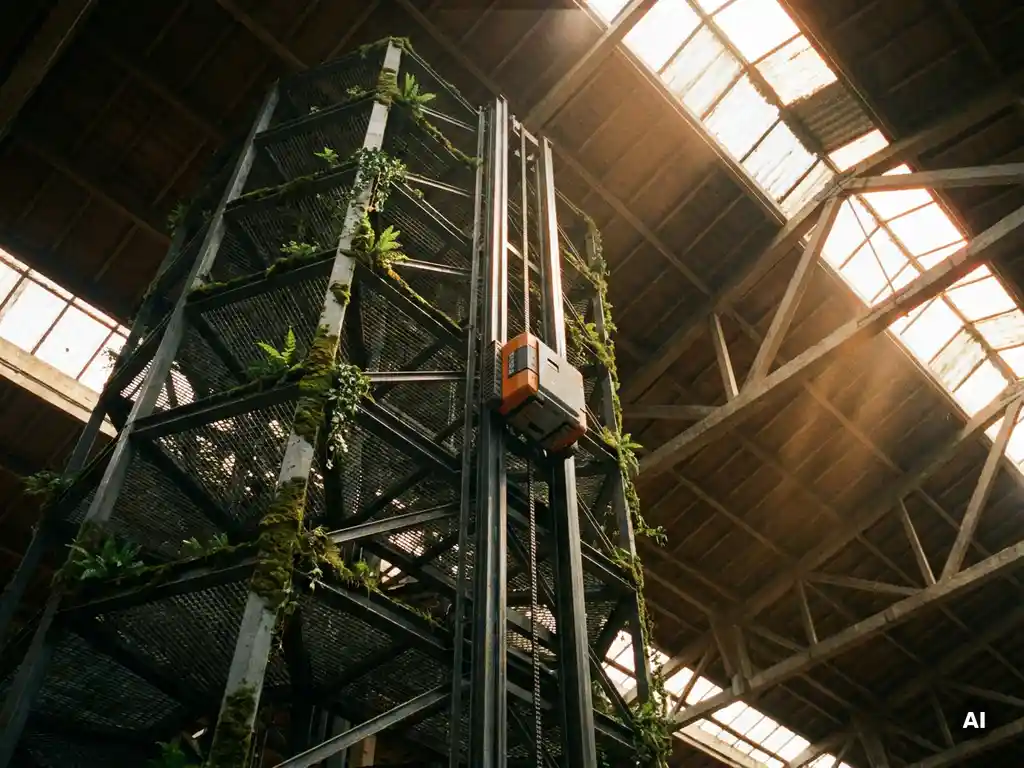
Warehouse automation delivers meaningful environmental benefits by reducing energy consumption, shrinking physical land use, cutting product waste, and lowering the carbon footprint of distribution operations. These gains come not from a single feature but from how automated systems fundamentally redesign the way storage and retrieval work. The sections below break down each environmental dimension in detail, from energy draw to long-term sustainability strategy.
How does warehouse automation reduce energy consumption?
Warehouse automation reduces energy consumption by replacing energy-intensive, always-on mechanical infrastructure with intelligent, on-demand robotic systems. Traditional warehouses rely on lighting across vast floor areas, powered conveyor belts, and large centralized cranes that consume electricity continuously regardless of demand. Automated systems concentrate activity and eliminate idle energy draw.
One of the most direct energy savings comes from eliminating electrification within the rack structure itself. In conventional high-bay storage systems, motors, sensors, and lifting mechanisms are embedded throughout the infrastructure, drawing power constantly. A system designed around passive structural geometry and autonomous robotic units removes that embedded power demand entirely. The robots carry the energy load, and they operate only when needed.
Lighting is another significant factor. Automated storage zones do not require human-safe illumination levels. By confining human activity to goods-to-person workstations at the perimeter, the storage area itself can run in near-darkness, substantially reducing lighting energy over the lifetime of the facility.
Robots designed for continuous, efficient motion also avoid the energy waste associated with empty trips and repositioning cycles. When a robotic unit completes a deposit and retrieval in one continuous vertical motion, it eliminates the redundant movements that inflate energy use in systems built around centralized cranes or fixed conveyors. Fewer mechanical actions per tote retrieved means lower energy per order fulfilled.
What is the carbon footprint impact of automated warehouses?
Automated warehouses reduce carbon footprint across three dimensions: lower operational energy demand, reduced construction material requirements, and a smaller physical building envelope needed to serve the same storage volume. Together, these factors decrease both the direct emissions from operations and the embodied carbon from infrastructure.
The construction phase matters more than many operators realize. A warehouse that stores the same number of totes in a compact, vertically optimized structure requires less steel, less concrete, and less land preparation than a sprawling conventional facility. Structural designs that minimize material use while maximizing cubic volume utilization directly reduce the embodied carbon of the building before a single robot moves.
Operationally, the shift from centralized crane-based systems to distributed autonomous robots reduces peak power demand. Conventional AS/RS systems with large centralized lifting cores create significant power spikes when the crane accelerates. Distributed robotic systems spread load across many smaller units, smoothing power consumption and making it easier to match energy supply to demand, which is particularly relevant as facilities move toward renewable energy sources with variable output.
Reduced maintenance requirements also contribute to a lower carbon footprint over time. Systems with fewer embedded mechanical components generate less waste from worn parts, require fewer service vehicles visiting the site, and have longer intervals between component replacement cycles.
How does high-density storage shrink a warehouse’s land footprint?
High-density automated storage reduces land footprint by converting vertical space into usable storage rather than expanding horizontally. A system that stores totes up to 16 meters in height within a compact structural footprint can serve the same inventory volume as a much larger conventional warehouse, freeing land for other uses or avoiding development altogether.
The environmental significance of land footprint is often underestimated. Warehouse development consumes greenfield and brownfield land, contributes to impermeable surface coverage that affects local water drainage, and fragments natural habitats near logistics corridors. Reducing the ground area required per storage position directly limits these impacts.
Hexagonal geometry amplifies this advantage. Where conventional rectangular racking achieves around 74% space utilization of a given cubic volume, a hexagonal structural approach can reach approximately 94% utilization. That difference translates directly into fewer square meters of building footprint needed to hold the same number of storage positions, which in turn means a smaller building envelope, less roofing material, and a reduced heating or cooling load.
For operators in urban or peri-urban locations where land is scarce and expensive, vertical density is not just an environmental benefit but a practical necessity. Automated systems that scale upward rather than outward allow facilities to remain within existing building boundaries, avoiding the need to acquire and develop additional land as inventory volumes grow.
Does warehouse automation reduce packaging and product waste?
Yes, warehouse automation reduces both packaging waste and product damage waste by improving inventory accuracy, enabling direct access to every stored item, and eliminating the physical handling errors that occur in manual operations. Fewer handling steps mean fewer opportunities for products to be damaged, mislabeled, or lost.
In manual warehouses, products are frequently moved, reshuffled, and rehandled as workers dig through storage locations to reach the required item. Each unnecessary movement is a risk point for damage, especially for fragile goods, temperature-sensitive products, or items with specific orientation requirements. Automated systems that provide direct access to every tote without reshuffling eliminate this category of damage entirely.
Inventory accuracy is closely linked to waste reduction. When a warehouse management system has precise, real-time visibility of every storage position, products are less likely to expire undetected, be over-ordered due to uncertainty about existing stock, or be written off because they cannot be located. Reducing stock loss through better visibility directly reduces the waste of both the product and all the packaging, transport, and energy that went into producing and delivering it.
Packaging optimization is a secondary benefit. When automated systems feed accurate demand data back into supply chain planning, businesses can reduce safety stock levels and order more precisely, which often reduces the total volume of inbound packaging material flowing through the facility.
How does automation affect a warehouse’s long-term sustainability goals?
Warehouse automation supports long-term sustainability goals by creating infrastructure that can adapt to changing volumes, energy sources, and regulatory requirements without requiring complete rebuilds. The ability to scale capacity and throughput independently, relocate or reconfigure the system, and integrate with evolving warehouse management platforms makes automated facilities more resilient over their operational lifespan.
Sustainability strategies rarely succeed when they require facilities to be rebuilt from scratch every time business conditions change. A modular automated system that expands by adding structural sections or additional robots avoids the material waste and construction emissions associated with tearing down and replacing fixed infrastructure. Growth happens through addition rather than replacement.
Energy transition is another long-term consideration. Facilities that reduce their total energy demand and eliminate dependency on embedded rack electrification are better positioned to run on renewable energy. Lower peak demand and smoother consumption profiles make it easier to size solar installations or battery storage systems appropriately, reducing reliance on grid electricity over time.
Regulatory pressure on warehouse operators is also increasing, particularly around carbon reporting, energy efficiency standards, and land use. Facilities that have already invested in high-density automated storage are better prepared to meet tightening requirements without costly retrofits, because the efficiency gains are built into the system’s architecture rather than added as afterthoughts.
Finally, automation supports sustainability reporting by generating the operational data needed to measure and demonstrate environmental performance. Energy consumption per order fulfilled, land use per storage position, and waste rates per throughput cycle all become measurable when a control system is tracking every movement in the facility.
How Hexxabotics helps with warehouse automation sustainability
Hexxabotics delivers a next-generation AS/RS system designed with environmental efficiency built into its core architecture, not bolted on as an afterthought. For industrial automation engineers evaluating green warehouse technology, the system addresses sustainability across every dimension covered in this article:
- No in-rack electrification: The passive hexagonal tower structure contains no embedded motors, sensors, or powered components, eliminating a major source of continuous energy draw and simplifying the facility’s electrical infrastructure.
- Vertical density up to 16 meters: By converting full cubic building volume into usable storage, Hexxabotics minimizes the land footprint and building envelope required to serve a given inventory volume.
- Direct access to every tote: No reshuffling, no unnecessary handling, and no product damage from repeated movement, reducing both product waste and the energy cost of redundant robotic cycles.
- Independent scalability: Capacity and throughput scale separately, meaning the system grows by addition rather than replacement, avoiding material waste from infrastructure rebuilds.
- Relocatable and reconfigurable: The modular architecture can be adapted to changing facility requirements without demolition, extending the useful life of the investment and reducing lifecycle emissions.
If you are evaluating AS/RS energy efficiency and want to understand how a hexagonal automated storage system fits your facility’s sustainability roadmap, explore Hexxabotics to learn more or get in touch with the team.
Related Articles
- Why is robot navigation accuracy critical in automated storage systems?
- What is an autonomous mobile robot used for in logistics?
- What is a warehouse execution system and how does it differ from a WMS?
- How do automated systems handle returns processing in e-commerce fulfillment?
- When should a 3PL provider invest in automated fulfillment systems?