
3PL providers typically choose between leasing and buying automation equipment based on contract duration, capital availability, and how predictable their client volume is. Leasing preserves cash and reduces risk when client contracts are short or uncertain, while buying delivers stronger long-term ROI when volume is stable and the operation is unlikely to relocate. The sections below unpack each factor in detail, from hidden lease costs to emerging financing structures reshaping how 3PLs fund warehouse robotics today.
What financial factors push 3PLs toward leasing automation equipment?
The primary financial driver toward leasing 3PL automation equipment is capital preservation. Third-party logistics providers operate on thin margins and often cannot justify locking millions into fixed assets when client contracts may run only two to three years. Leasing converts a large upfront capital expenditure into predictable monthly operating costs, which improves cash flow and keeps credit lines available for other investments.
Beyond cash flow, leasing shifts the balance sheet risk. Owned automation equipment depreciates and can become a liability if a client relationship ends or volume drops. A lease agreement transfers much of that obsolescence and residual value risk back to the equipment provider or financier.
Several additional financial factors make leasing attractive for 3PLs:
- Operating expense treatment: Lease payments are often classified as operating expenses rather than capital expenditures, which can improve financial ratios and simplify budget approval processes.
- Tax efficiency: Depending on jurisdiction, lease payments may be fully deductible, whereas owned assets are depreciated over many years.
- Reduced maintenance liability: Many lease structures include service agreements, reducing the cost and complexity of maintaining robotic systems in-house.
- Faster deployment: Leasing can accelerate procurement timelines because it avoids lengthy capital approval cycles.
When does buying automation equipment make more sense for a 3PL?
Buying warehouse automation makes more sense for a 3PL when the operation has long-term volume certainty, stable client relationships, and a facility it expects to occupy for seven years or more. In these conditions, the total cost of ownership for purchased equipment is typically lower than the cumulative cost of leasing over the same period, and the 3PL captures the full residual value of the asset.
Ownership also makes sense when the 3PL has strong enough margins or access to low-cost financing to absorb the upfront capital requirement. In those cases, the return on investment from owned automation can be realized more quickly because there are no ongoing lease payments eroding the margin benefit.
Additional scenarios where buying tends to win:
- The automation system is highly customized to the 3PL’s specific workflow and would be difficult to return or redeploy.
- The 3PL operates in a sector, such as pharma or food, where regulatory continuity and system stability are priorities over flexibility.
- The provider wants full control over software integrations, upgrades, and maintenance schedules without being subject to a lessor’s terms.
- The company has significant tax appetite for depreciation benefits from capital investment.
How does contract length influence the lease-or-buy decision?
Contract length is one of the most direct inputs into the lease-or-buy decision for third-party logistics automation. When a 3PL secures a client contract of three years or less, leasing is almost always the safer financial choice because the automation investment timeline aligns with the revenue timeline. Buying equipment that must be paid off over seven to ten years while the underlying client contract expires in two creates serious financial exposure.
Conversely, when a 3PL wins a long-term dedicated logistics contract of five years or more, the math often shifts toward ownership. The longer the contract, the more time there is for the warehouse automation ROI to materialize and for the asset to generate value beyond its cost.
A useful rule of thumb: if the expected client relationship is shorter than the depreciation period of the automation asset, leasing is the lower-risk path. If the relationship is longer, buying typically delivers better economics. Many 3PLs also use a hybrid approach, leasing the robotics hardware while owning the software licenses and integration infrastructure, to balance flexibility with control.
What are the hidden costs of leasing warehouse automation?
The hidden costs of leasing warehouse automation equipment can significantly erode the apparent savings of avoiding upfront capital. The most common is the cumulative lease premium: over a seven- to ten-year period, total lease payments often exceed the original purchase price of the equipment by a meaningful margin, meaning the 3PL pays more in total while never owning the asset.
Other costs that are frequently underestimated include:
- End-of-lease obligations: Many agreements require the equipment to be returned in near-original condition, triggering unexpected refurbishment or decommissioning costs.
- Upgrade lock-in: Some leases restrict modifications or integrations, meaning the 3PL cannot adapt the system to new client requirements without renegotiating or paying penalties.
- Early termination fees: If a client relationship ends before the lease does, the 3PL may still owe the remaining lease balance, creating a direct financial loss.
- Escalation clauses: Lease agreements sometimes include annual cost escalations tied to inflation indices, increasing payments over time in ways that were not fully modeled at signing.
- Integration costs not covered by the lease: Software, API connections, and staff training are typically the 3PL’s responsibility regardless of the lease structure.
Understanding these costs upfront is essential. A lease that looks attractive at the headline monthly payment can become expensive when all obligations are accounted for across the full term.
How does automation scalability affect the lease-vs-buy calculation?
Scalability is a critical but often overlooked variable in the AS/RS financing decision. Traditional automation systems link storage capacity and throughput performance together in the same physical infrastructure, meaning that scaling up requires significant additional capital investment regardless of whether the equipment is leased or owned. This rigidity makes both leasing and buying more expensive over time as volume grows.
Systems designed with independent scalability change the calculation considerably. When a 3PL can increase storage capacity by extending the structure and increase throughput simply by adding more autonomous robot units, without redesigning or replacing core infrastructure, the total cost of scaling drops substantially. This matters for the financing decision because it reduces the risk of the original investment becoming obsolete as the operation grows.
For 3PLs evaluating 3PL warehouse robotics, the key scalability questions to ask before committing to a lease or purchase are:
- Can throughput be increased without structural changes?
- Can storage capacity expand without replacing the core system?
- Is the system relocatable if the 3PL moves facilities or loses a client?
- Does adding capacity require new software licensing or integration work?
A system that scores well on all four points carries lower long-term financial risk under either a lease or a purchase structure, because the investment retains its value and utility as the operation evolves.
Which automation financing models are emerging in the 3PL market?
The warehouse automation ROI conversation is shifting in 2026 as new financing models reduce the barrier to adoption for 3PLs that cannot justify large upfront capital commitments. The most significant emerging model is Robotics-as-a-Service (RaaS), where the provider charges a per-pick or per-tote fee rather than a fixed monthly payment, directly tying automation costs to actual operational output and client revenue.
Other models gaining traction include:
- Managed service agreements: The automation vendor retains ownership and responsibility for the system while the 3PL pays a fixed operational fee. This bundles hardware, software, and maintenance into one predictable cost.
- Phased purchase programs: 3PLs begin with a lease or rental arrangement and convert to ownership after a defined period, allowing them to validate ROI before committing to full capital expenditure.
- Sale-leaseback structures: A 3PL that has already purchased automation can sell the equipment to a financier and lease it back, freeing up capital while retaining operational use of the system.
- Vendor financing: Automation providers are increasingly offering direct financing programs, often at competitive rates, to accelerate adoption and maintain closer long-term relationships with operators.
The common thread across all these models is a shift away from binary lease-or-buy decisions toward structures that align payment with performance and reduce the financial risk of automation investment for 3PLs operating in unpredictable demand environments.
How Hexxabotics helps 3PLs navigate the automation investment decision
Hexxabotics is designed to address the core financial risks that make 3PLs hesitant to commit to warehouse automation, whether they are leasing or buying. The system’s architecture directly reduces the long-term cost exposure that complicates both financing paths.
- Independent scalability: Storage capacity and throughput scale separately, so 3PLs never overbuy at the start or face expensive infrastructure redesigns as volume grows.
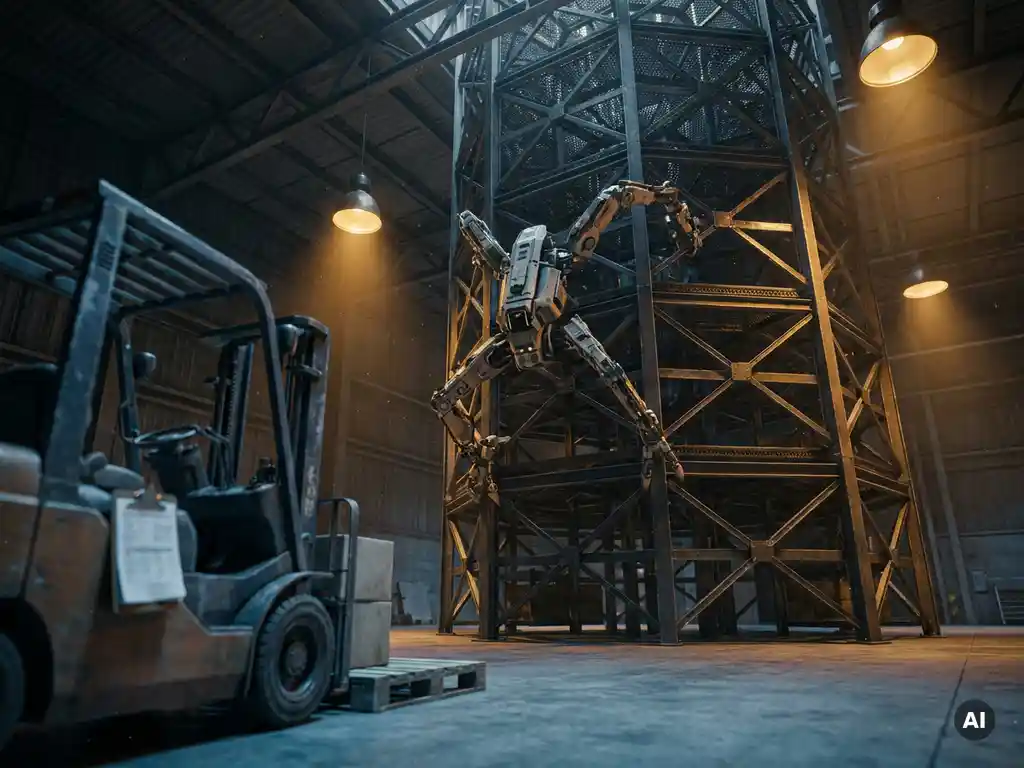
- No in-rack electrification: The passive steel structure contains no embedded motors or electronics, reducing maintenance costs and simplifying relocation if a facility or client contract changes.
- Relocatable and reconfigurable: The modular hexagonal towers can be moved and rebuilt without custom engineering, protecting the asset value under both lease and ownership structures.
- Direct access to every tote: No reshuffling or digging means consistent operational performance from day one, supporting the ROI projections that underpin any financing decision.
- Standard API integration: The Hexxabotics Control System connects to existing warehouse management systems, reducing the integration costs that often fall outside lease agreements.
For 3PLs evaluating their next automation investment, the architecture matters as much as the financing structure. Explore the Hexxabotics system to see how scalable, relocatable AS/RS design can strengthen the financial case for automation regardless of how you choose to fund it.
Related Articles
- Can warehouse automation lower your energy consumption?
- How does predictive maintenance prevent downtime in automated warehouses?
- How do warehouse AMRs communicate and coordinate in real time?
- What is the difference between an AMR and an AGV in warehousing?
- Should you choose an AMR system or a fixed-rail AS/RS in 2026?