
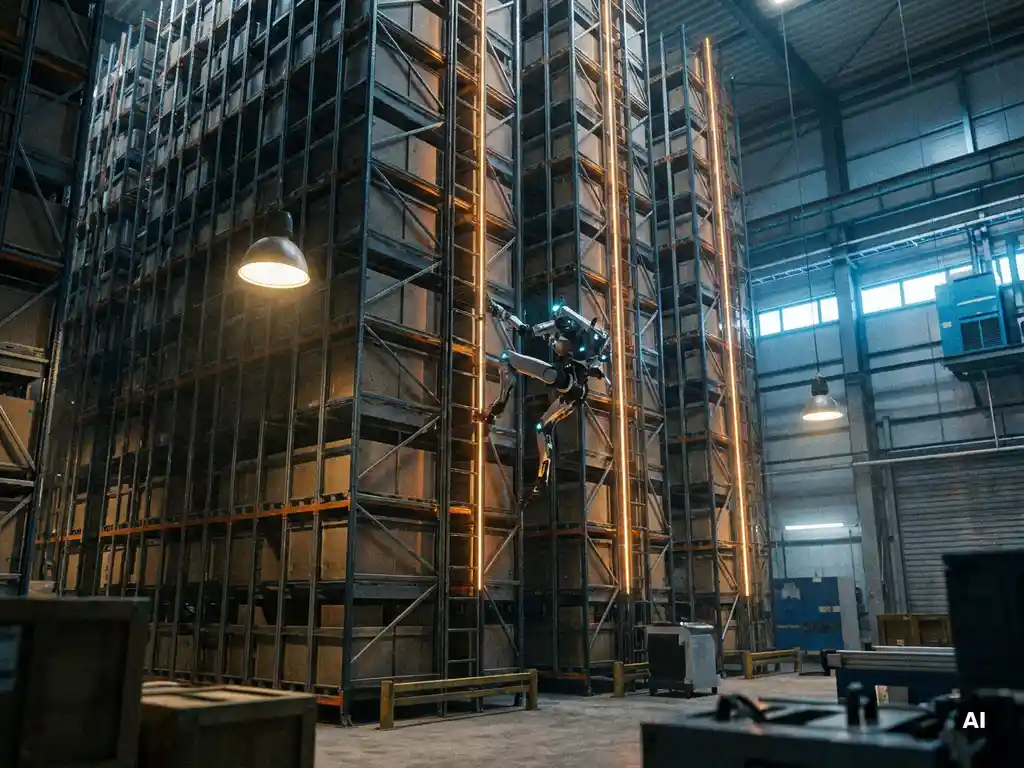
Yes, warehouse automation can meaningfully lower energy consumption. By replacing energy-intensive manual processes and centralized mechanical infrastructure with distributed robotic systems, automated warehouses reduce unnecessary movement, eliminate idle lighting and climate loads, and cut power demand at the structural level. The gains are most significant when the automation system is designed with energy efficiency as a core architectural principle, not an afterthought. The questions below unpack exactly where those savings come from and how to evaluate them when choosing an AS/RS.
Which warehouse operations consume the most energy?
The largest energy draws in a conventional warehouse are lighting, climate control, and powered material handling equipment. Lighting and HVAC together typically account for the majority of a warehouse’s energy bill, with forklifts, conveyor systems, and centralized lifting equipment adding significant additional load. Understanding where energy goes is the first step toward reducing it.
Manual warehouses require full illumination across all working areas at all times, since human workers need visibility throughout the facility. Forklifts and reach trucks consume energy continuously, whether they are carrying a load or traveling empty between tasks. Centralized conveyor systems run at fixed speeds regardless of actual throughput demand, meaning energy is consumed even during quiet periods.
Powered rack systems add another layer. Traditional high-bay AS/RS solutions embed motors, lifting mechanisms, and electrification directly into the rack structure itself. That embedded infrastructure draws power constantly and requires additional cooling and maintenance overhead. Every component that is always on is always consuming energy, whether or not it is doing useful work.
Does a higher-density storage system use less energy overall?
A higher-density storage system generally uses less energy per stored unit because it concentrates inventory into a smaller physical footprint, reducing the building volume that must be lit, heated, or cooled. When a system can store the same number of totes in half the floor space, the facility’s baseline energy load drops proportionally.
This relationship between density and energy efficiency is direct. A compact, high-density storage system means fewer square meters of warehouse floor to maintain, fewer lighting circuits to power, and a smaller envelope for climate control systems to manage. The energy savings compound over time, particularly in temperature-controlled environments such as food and pharmaceutical storage where HVAC costs are substantial.
Vertical storage amplifies this benefit further. Systems that use full building height, up to 16 meters in some architectures, convert cubic volume into usable storage without expanding the building’s footprint. The result is more inventory capacity from the same energy-consuming envelope, which directly improves the energy cost per stored unit.
What’s the difference between electrified rack systems and autonomous robots?
Electrified rack systems embed motors, power rails, and lifting mechanisms directly into the storage structure, meaning the infrastructure itself consumes energy continuously regardless of activity. Autonomous robots, by contrast, carry their own power source and only consume energy when performing active tasks, leaving the rack structure entirely passive and unpowered.
This is a fundamental architectural difference with real energy consequences. In a traditional electrified AS/RS, power must flow through the rack at all times to keep lifting systems ready and sensors active. If a component fails, the entire powered section may go offline. Maintenance requires working around live infrastructure, and relocation or reconfiguration means re-electrifying the structure from scratch.
Autonomous robotic systems shift the energy load to the robots themselves. Because the storage structure contains no embedded electronics, motors, or cabling, it draws no standby power. The robots operate on onboard batteries and, in well-designed systems, are charged while in process rather than requiring dedicated downtime. This eliminates unnecessary power peaks and reduces the overall energy demand of the system significantly.
The absence of in-rack electrification also simplifies the physical infrastructure. No powered racks means fewer failure points, lower installation complexity, and no need for electrical contractors to work inside the storage structure during expansion or reconfiguration.
How much energy can AS/RS save compared to manual warehousing?
Automated storage and retrieval systems can reduce warehouse energy consumption substantially compared to manual operations, though the exact figure depends on the specific system architecture, facility size, and the manual baseline being replaced. The savings come from multiple compounding sources rather than a single efficiency gain.
Lighting and climate savings
Automated systems operate in dark, unoccupied storage zones. Because robots do not need visibility to navigate, lighting in the storage area can be eliminated or reduced to minimal maintenance levels. In large facilities, this alone represents a significant portion of total energy spend. Climate control savings follow a similar logic: a denser, more compact storage footprint requires less conditioned air volume to maintain.
Movement and motion efficiency
Manual warehousing involves substantial empty travel, where workers or forklifts move through the facility without carrying inventory. Autonomous robots in a well-designed AS/RS minimize wasted movement by completing deposit and retrieval in a single continuous cycle. Systems where each robot completes a full vertical interaction in one motion, rather than making separate trips for deposit and retrieval, avoid the energy cost of redundant travel entirely.
Should energy efficiency factor into an AS/RS purchasing decision?
Yes, energy efficiency should be a meaningful factor in any AS/RS purchasing decision, both because of its direct impact on operating costs and because energy infrastructure requirements affect installation complexity and long-term flexibility. A system that requires less power also requires less electrical infrastructure, which reduces both capital expenditure and ongoing maintenance costs.
When evaluating AS/RS options, consider the following energy-related criteria:
- In-rack electrification: Does the rack structure itself require power, or is all energy carried by the robots? Passive racks eliminate standby consumption and reduce installation complexity.
- Charging architecture: Are robots charged during active operation or during dedicated downtime? In-process charging avoids idle periods and keeps throughput consistent without adding peak power demand.
- System density: A higher-density system in a smaller footprint reduces the building’s baseline energy load for lighting and climate control.
- Centralized versus distributed operation: Centralized cranes and conveyor systems run continuously regardless of demand. Distributed robotic systems scale energy use with actual throughput, avoiding waste during low-activity periods.
- Scalability without infrastructure changes: Systems that allow throughput scaling by adding robots, rather than rebuilding powered infrastructure, avoid the energy and cost overhead of major expansions.
Energy efficiency also intersects with sustainability commitments. In 2026, many industrial operators are under increasing pressure to reduce Scope 2 emissions and demonstrate measurable progress on energy reduction. An AS/RS that structurally reduces power demand supports those goals without requiring separate efficiency programs.
How Hexxabotics helps with warehouse automation energy consumption
Hexxabotics is designed from the ground up to reduce the energy footprint of automated storage and retrieval. The system’s architecture directly addresses the sources of energy waste identified throughout this article:
- No in-rack electrification: The hexagonal tower structure contains no embedded motors, power rails, or lifting systems, eliminating standby power consumption from the storage infrastructure entirely.
- Compact, high-density storage: By utilizing full building height up to 16 meters within a minimal footprint, the system reduces the building volume requiring lighting and climate control.
- Efficient robot motion: Hexxabots complete deposit and retrieval in one continuous vertical cycle, minimizing wasted travel and energy expenditure per transaction.
- In-process charging: Robots are charged while operating, avoiding power peaks and eliminating the need for dedicated charging downtime.
- Distributed operation: No centralized cranes or conveyors run at fixed power levels. Energy consumption scales with actual throughput demand.
If you are evaluating AS/RS options and energy efficiency is a priority alongside storage density and throughput scalability, explore the Hexxabotics system or learn more about the company to understand how the architecture supports your operational and sustainability goals.
Related Articles
- What are the long-term operational costs of warehouse automation?
- How does a hexagonal grid system change warehouse logistics?
- How does predictive maintenance prevent downtime in automated warehouses?
- What is the difference between an AMR and an AGV in warehousing?
- Should you choose an AMR system or a fixed-rail AS/RS in 2026?