
The long-term operational costs of warehouse automation typically include maintenance and servicing, energy consumption, software licensing, spare parts, and labor for system oversight. For most operations, these ongoing costs are significantly lower than the labor costs they replace, but the exact profile depends heavily on the system architecture chosen. The sections below break down each major cost driver and explain how design decisions made at deployment shape what you pay for years afterward.
What are the biggest ongoing cost drivers after deployment?
After a warehouse automation system goes live, the dominant ongoing cost categories are mechanical maintenance, software and controls support, energy consumption, consumables and spare parts, and the residual labor required to supervise and operate the system. The relative weight of each category depends directly on how mechanically complex the installed system is and how much of the infrastructure carries embedded electronics or moving parts.
Traditional AS/RS architectures tend to concentrate cost in a small number of high-value components. Centralized cranes, fixed vertical conveyors, and powered rack structures all require scheduled preventive maintenance, and when they fail, they can bring throughput to a halt. Systems built around a distributed robotic model shift this profile considerably: because no single machine handles the majority of the work, maintenance events affect a smaller portion of total capacity at any given time.
Beyond mechanical upkeep, software support contracts and WMS integration maintenance are recurring line items that operators sometimes underestimate at the planning stage. These costs are relatively predictable but should be factored into any total cost of ownership model from the outset.
How much does warehouse automation maintenance typically cost?
Warehouse automation maintenance costs vary widely based on system type, but industry experience suggests that annual maintenance expenditure for an AS/RS installation typically falls in the range of two to five percent of the initial capital investment per year. Systems with significant embedded infrastructure, such as powered racks, centralized lifting cores, or fixed conveyor networks, tend to sit toward the higher end of that range.
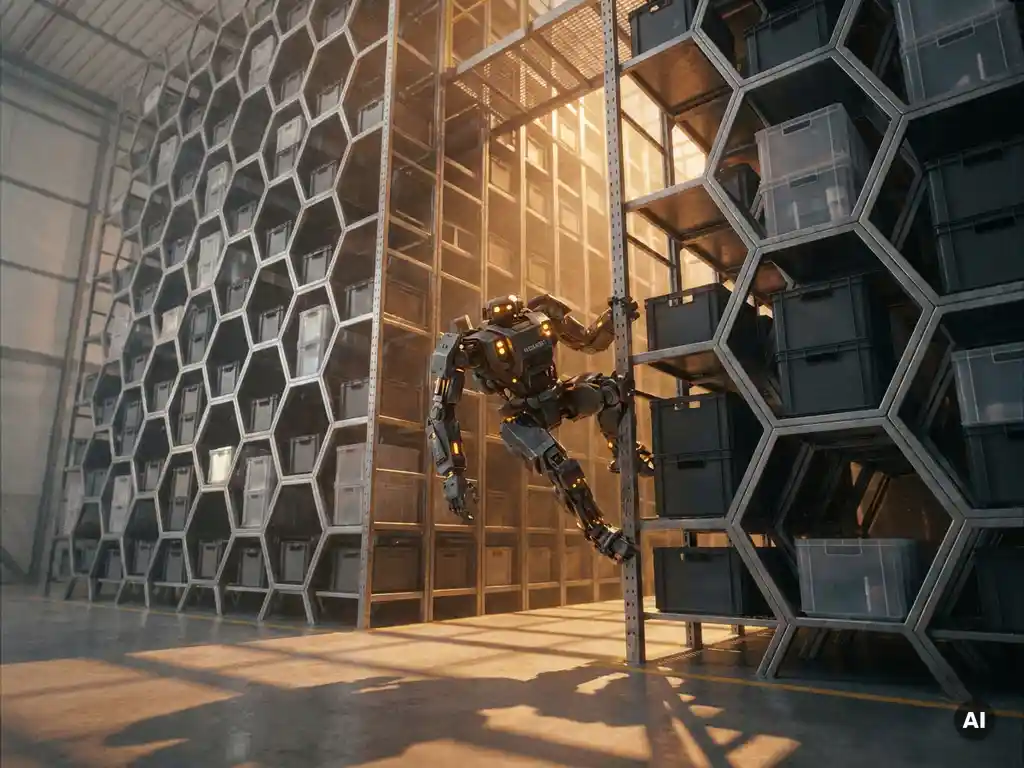
The key variable is component density. Every motor, sensor, cable, and actuator embedded in the fixed structure is a potential failure point that requires periodic inspection, calibration, or replacement. Systems designed with passive steel structures and no in-rack electrification eliminate entire categories of maintenance work. When vertical movement is handled by detachable robotic units rather than fixed lifting infrastructure, the rack itself becomes a passive asset with a very long service life and minimal upkeep requirements.
Labor is the other dimension of maintenance cost. Highly centralized systems often require specialized technicians for scheduled servicing, whereas distributed robotic systems can frequently be maintained by in-house teams with standard training, reducing dependency on external service contracts.
How does scalability affect long-term automation costs?
Scalability has a direct and often underappreciated impact on long-term warehouse automation costs. Systems where storage capacity and throughput are tightly coupled force operators into expensive infrastructure overhauls whenever demand grows. Adding capacity in these architectures can require structural modifications, additional conveyors, or duplicating core equipment, each of which carries both capital and ongoing maintenance implications.
A system that separates storage capacity from throughput performance avoids this compounding cost problem. When capacity can be increased by extending the modular structure and throughput can be increased by adding autonomous robotic units, neither change requires redesigning the underlying infrastructure. This means the cost of growth is linear and predictable rather than exponential and disruptive.
There is also an operational continuity dimension to scalability. Systems that require a shutdown to expand impose a hidden cost in lost throughput during the expansion period. Architectures designed so that scaling happens during regular operations without stopping daily processes eliminate this cost entirely, which becomes significant for operations running at high utilization.
What is the total cost of ownership for a warehouse automation system?
The total cost of ownership (TCO) for a warehouse automation system encompasses capital expenditure at installation, ongoing operational costs over the system’s lifespan, and end-of-life costs such as decommissioning or reconfiguration. A realistic TCO model should cover a minimum of ten years, since most AS/RS investments are made with a decade-plus time horizon in mind.
Capital expenditure components
Initial CAPEX includes the structural hardware, robotic units, control software, integration work, and installation. The structural geometry of the system directly affects this figure. Hexagonal tower architectures, for example, achieve higher space utilization per unit of steel compared to conventional rectangular rack systems, which reduces the material cost per storage position. Systems that require no in-rack electrification also reduce installation complexity and the associated labor cost.
Operational expenditure components
Ongoing OPEX covers energy, maintenance, software licensing, spare parts, and the labor required to run and oversee the system. Over a ten-year period, these costs frequently exceed the original capital investment in traditional high-bay systems. For modern distributed AS/RS architectures, the OPEX profile is flatter because the absence of centralized mechanical systems removes the largest and most expensive maintenance categories. Relocatability and reconfigurability also contribute to TCO: a system that can be moved or adapted without being scrapped retains residual value that a fixed installation does not.
How does energy consumption factor into automation operating costs?
Energy consumption is a significant and growing component of warehouse automation operating costs, particularly as energy prices remain elevated across most markets in 2026. The energy profile of an AS/RS is determined primarily by how many motorized systems run continuously and how efficiently the system manages movement cycles.
Systems with powered rack structures, fixed vertical conveyors, and centralized cranes consume energy continuously, regardless of whether they are actively processing orders. In contrast, systems where all energy consumption is concentrated in the robotic units themselves can be managed much more efficiently. Robots that complete a full deposit-and-retrieve cycle in one continuous vertical interaction perform dual cycles without empty trips, which directly reduces energy waste per order line processed.
The absence of in-rack electrification is particularly meaningful from an energy standpoint. No embedded motors, no powered racks, and no fixed lifting infrastructure means there is no baseline power draw from the structure itself. Energy consumption scales with actual throughput demand rather than running at a fixed level around the clock, which produces lower average energy costs and simplifies the facility’s electrical infrastructure.
When does warehouse automation deliver a positive ROI?
Warehouse automation typically delivers a positive return on investment within three to seven years, though the timeline depends on labor costs in the specific market, the volume of orders processed, the cost of the system chosen, and how effectively the system was sized and deployed. Operations with high labor costs, high order volumes, and strong throughput requirements tend to reach payback faster.
Several factors accelerate the ROI timeline. First, storage density gains reduce the cost per storage position, which can defer or eliminate the need for facility expansion. Second, throughput improvements reduce the per-unit cost of each order processed. Third, reduced labor dependency lowers ongoing wage and recruitment costs. Fourth, error reduction and direct-access inventory management cut the hidden costs associated with mispicks, reshuffling, and delayed order fulfillment.
The ROI calculation should also account for the cost of not automating. As labor markets tighten and order complexity increases, manual warehouse operations face rising costs and declining reliability. When the baseline comparison includes realistic labor cost escalation over the investment period, the ROI case for automation strengthens considerably. Systems designed for independent scalability of capacity and throughput also protect ROI by avoiding the costly infrastructure rebuilds that erode returns in less flexible architectures.
How Hexxabotics helps reduce long-term operational costs
Hexxabotics is designed from the ground up to minimize the cost drivers that make warehouse automation expensive to run over time. The system’s architecture directly addresses the most common sources of ongoing operational expenditure:
- No in-rack electrification eliminates embedded motors, cabling, and powered rack components, removing entire maintenance categories and reducing energy baseline costs.
- Distributed robotic operation eliminates single points of failure, so one unit stopping does not halt the system, reducing downtime risk and its associated cost.
- Independent scalability of storage capacity and throughput means growth never requires structural redesign, keeping expansion costs linear and predictable.
- 100% direct access to every storage location removes the need for reshuffling, reducing cycle times and energy per order processed.
- Passive steel structure with no embedded lifting systems extends the service life of the fixed infrastructure and simplifies fire safety and facility compliance.
- Relocatable and reconfigurable design preserves asset value across the system’s lifespan, contributing to a stronger long-term TCO position.
If you are evaluating the long-term operational cost profile of an AS/RS investment, Hexxabotics offers a system architecture built to keep those costs low from day one. Learn more about the technology and the team behind it on the Hexxabotics about page.
Related Articles
- Can warehouse automation lower your energy consumption?
- How does a hexagonal grid system change warehouse logistics?
- How does predictive maintenance prevent downtime in automated warehouses?
- How do warehouse AMRs communicate and coordinate in real time?
- What is the difference between an AMR and an AGV in warehousing?