
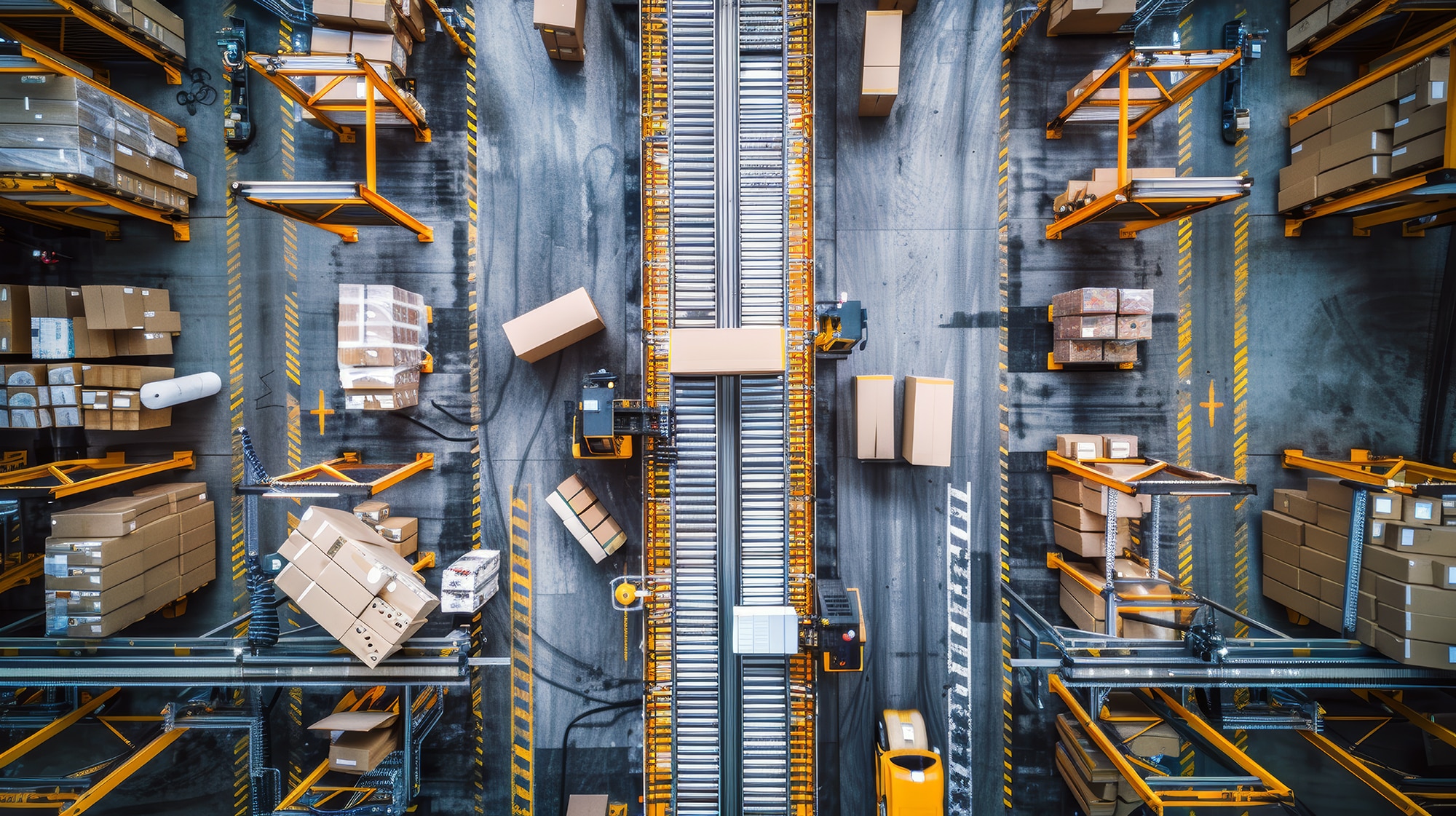
Warehouse automation significantly speeds up order processing, with automated systems typically completing pick, sort, and dispatch cycles in a fraction of the time required by manual operations. The core reason is simple: robots do not fatigue, do not make navigation errors, and can operate continuously across all shifts. The sections below break down exactly where those speed gains come from and which warehouse environments benefit most.
How much faster is automated order fulfillment compared to manual picking?
Automated order fulfillment is substantially faster than manual picking, often reducing cycle times by 50 to 80 percent depending on the system design and product mix. In a manual warehouse, a picker walks to a location, searches for the correct item, and returns to a packing station. Automation eliminates every one of those steps by bringing goods directly to the operator.
The speed advantage compounds across a full shift. A human picker covers significant ground over an eight-hour period, and fatigue degrades both pace and accuracy as the day progresses. Automated Storage and Retrieval Systems maintain consistent cycle times from the first hour to the last, which means the throughput figure you calculate at the start of a shift is the throughput figure you can rely on at the end of it.
Order processing speed also improves because automation removes the dependency on individual worker availability. Staffing shortages, training gaps, and absenteeism do not interrupt system performance. The result is a more predictable fulfillment operation that can commit to tighter delivery windows with greater confidence.
What parts of the order process does automation actually speed up?
Automation accelerates four distinct stages of the order process: storage and retrieval, sortation, packing station throughput, and dispatch preparation. Each stage contributes to the total cycle time between an order being placed and a parcel leaving the building, and gains in any one stage reduce the overall end-to-end time.
- Storage and retrieval: Automated systems locate and retrieve totes without human navigation, eliminating travel time as the primary bottleneck in picking operations.
- Sortation: Automated conveyors and sortation systems route items to the correct packing station without manual intervention, reducing misrouting and wait time.
- Packing station throughput: Goods-to-Person workstations present items directly to operators, who spend their time packing rather than walking, dramatically increasing units processed per hour.
- Dispatch preparation: Integrated software coordinates order consolidation and label generation in parallel with picking, so orders are ready to ship as soon as they are packed.
The greatest single gain typically comes from retrieval. In a manual warehouse, travel time can account for more than half of a picker’s working day. Removing that travel time through automated retrieval immediately compresses cycle times and increases the number of orders a facility can process within a given window.
How does storage density affect order processing speed?
Higher storage density directly improves order processing speed by reducing the distance and time required to retrieve any given item. When inventory is spread across a large, low-density footprint, retrieval paths are longer and retrieval times increase. Compact, high-density storage concentrates inventory into a smaller volume, which means robots travel shorter distances and complete cycles faster.
There is a second mechanism at work: direct accessibility. In many dense storage systems, reaching a specific tote requires moving other totes out of the way first, a process known as digging. Digging introduces variable retrieval times and creates unpredictable delays that are difficult to plan around. Systems that provide 100 percent direct access to every storage location eliminate this variability entirely, delivering consistent retrieval times regardless of where an item sits within the structure.
Vertical density adds another dimension. Systems that utilize full building height, up to 16 meters in advanced AS/RS designs, store far more inventory within the same floor footprint. This means fewer locations are physically distant from the retrieval point, and the system can serve a broader SKU range without extending the horizontal footprint or increasing travel distances for robots operating at ground level.
How does adding more robots increase warehouse throughput?
Adding more robots increases warehouse throughput because robotic systems in distributed architectures scale linearly. Each additional robot unit contributes an independent, parallel retrieval and storage capability. Unlike systems built around a single crane or centralized conveyor, distributed robotic systems have no central bottleneck that caps total performance as volume increases.
This is a fundamental architectural distinction. In a traditional crane-based AS/RS, the crane is both the retrieval mechanism and the throughput ceiling. When demand exceeds its capacity, the only option is to add another crane, which requires structural changes and significant capital investment. In a distributed robotic system, adding a robot unit adds throughput without any infrastructure modification.
The practical implication is that warehouses can scale throughput in response to demand rather than in anticipation of it. A facility can operate with a baseline robot count during normal periods and add units during peak seasons without rebuilding or reconfiguring the underlying structure. Storage capacity and throughput performance become independently controllable variables, which gives operations teams a level of flexibility that fixed infrastructure simply cannot provide.
What types of warehouses benefit most from automation for order speed?
Warehouses handling high order volumes, large SKU counts, or time-sensitive fulfillment benefit most from automation. E-commerce fulfillment centers, pharmaceutical distribution, food and grocery operations, and 3PL logistics providers are among the environments where automated order processing speed delivers the clearest operational and commercial advantage.
- E-commerce fulfillment: High order frequency, small order sizes, and tight same-day or next-day delivery commitments make retrieval speed and accuracy critical.
- Food and grocery: Short product shelf lives and strict rotation requirements demand fast, reliable retrieval with consistent cycle times.
- Pharma and healthcare: Batch traceability, regulatory compliance, and the consequences of errors make automated, direct-access retrieval particularly valuable.
- 3PL providers: Multi-client environments with variable SKU profiles and fluctuating volumes benefit from systems that can scale throughput without infrastructure changes.
- Fashion and apparel: High SKU complexity and seasonal demand peaks require systems that handle variety without sacrificing retrieval speed.
Facilities with a wide product mix and unpredictable demand patterns gain the most, because automation removes the human coordination overhead that manual operations require when order profiles change rapidly.
Does warehouse automation improve order accuracy as well as speed?
Yes, warehouse automation improves order accuracy alongside speed, and the two gains are closely related. Automated retrieval systems eliminate the most common sources of picking errors: misidentification of locations, incorrect item selection, and miscounts. When a system retrieves a specific tote and presents it to an operator at a Goods-to-Person station, the system already knows exactly what is in that tote, reducing the opportunity for human error at the point of pick.
Inventory accuracy also improves because every movement in and out of an automated system is recorded by the control software. There is no silent stock discrepancy caused by a misplaced tote or an unrecorded manual transfer. The warehouse management system and the AS/RS control layer maintain a synchronized, real-time inventory picture that supports accurate order promising and reduces the frequency of failed picks caused by phantom stock.
The combined effect of speed and accuracy is operationally significant. Fewer errors mean fewer returns, fewer customer service contacts, and lower reverse logistics costs. In high-volume environments, even a modest improvement in accuracy rate translates into a meaningful reduction in operational overhead and a measurable improvement in customer satisfaction.
How Hexxabotics helps with order processing speed
Hexxabotics is built specifically to address the speed and throughput challenges described throughout this article. The system combines a hexagonal high-density storage grid, autonomous Hexxabots, and direct-access retrieval to eliminate the bottlenecks that slow conventional warehouse operations.
- 100% direct access: Every storage location is reachable without digging or reshuffling, delivering consistent retrieval times across the entire inventory.
- Distributed robot architecture: No centralized crane or single point of failure. Throughput scales linearly by adding robot units, not by rebuilding infrastructure.
- One continuous retrieval motion: Hexxabots complete a full deposit-and-retrieve cycle in a single vertical interaction, eliminating empty trips and wasted movement.
- Independent scalability: Storage capacity and throughput performance scale separately, so operations can respond to demand without structural redesign.
- No in-rack electrification: Simpler infrastructure means fewer failure points and lower maintenance overhead, supporting reliable uptime across all shifts.
If you are evaluating automated storage and retrieval options for your facility and want to understand how the Hexxabotics architecture applies to your specific throughput and density requirements, get in touch with the Hexxabotics team to discuss your operation.