
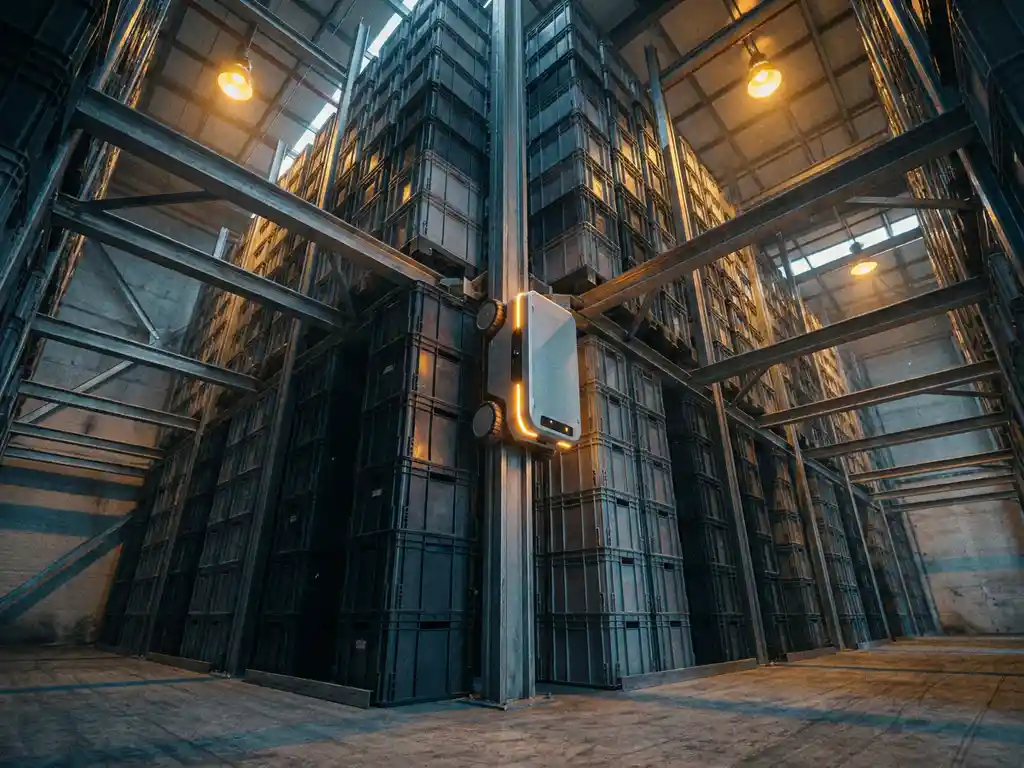
Digital twins help prevent warehouse operational failures by creating a real-time virtual replica of the physical warehouse environment, allowing operators to detect anomalies, simulate stress scenarios, and intervene before failures occur. Rather than reacting to breakdowns after the fact, warehouses using digital twin technology shift to a proactive model where problems are identified and resolved in the system’s virtual layer first. The questions below unpack exactly how this works across detection, maintenance, integration, and implementation timing.
What types of warehouse failures can digital twins detect early?
Digital twins can detect a broad range of warehouse operational failures early, including equipment malfunctions, inventory flow bottlenecks, throughput degradation, pick-path inefficiencies, and mechanical wear in automated systems. By continuously comparing the virtual model against real-world sensor data, the twin flags deviations before they compound into costly downtime or missed orders.
In practice, early detection categories fall into three main areas:
- Mechanical failures: Unusual vibration patterns, motor load spikes, or movement anomalies in robots and conveyors that precede physical breakdowns
- Flow and throughput failures: Queue buildups at specific stations, uneven robot utilization, or order cycle times creeping above threshold
- Inventory and logic failures: Misrouted totes, incorrect location assignments, or discrepancies between physical stock and system records
The value of early detection compounds over time. A single undetected conveyor fault can cascade into a full-line stoppage during peak demand. A digital twin surfaces the warning signal hours or days earlier, giving engineering teams a window to schedule corrective action without disrupting live operations.
How does a digital twin model real-time warehouse conditions?
A digital twin models real-time warehouse conditions by continuously ingesting data from physical sensors, control systems, and operational software, then updating a synchronized virtual replica that reflects the current state of the facility. The twin does not just visualize the warehouse; it runs the same logic as the real system, making it possible to test interventions without touching live operations.
The data sources that feed a warehouse digital twin typically include:
- IoT sensors on robots, conveyors, and storage systems tracking position, speed, temperature, and load
- Warehouse management system (WMS) and warehouse control system (WCS) feeds for order status and inventory state
- Energy consumption meters that reveal abnormal power draw patterns
- Camera and vision systems for spatial occupancy and movement tracking
Once synchronized, the twin runs continuously alongside the physical operation. Engineers can query the model, run what-if simulations, and observe how a proposed change, such as adding a robot or rerouting a pick path, would affect overall performance before committing to it in the real environment. This simulation capability is what separates a digital twin from a simple monitoring dashboard.
How do digital twins support predictive maintenance for warehouse robots?
Digital twins support predictive maintenance for warehouse robots by tracking the operational history and real-time performance of each robotic unit, building a behavioral baseline that makes abnormal wear or stress patterns detectable well before a failure occurs. Instead of scheduling maintenance on fixed intervals, teams act on actual condition data surfaced by the twin.
For robotic AS/RS environments in particular, this matters because individual robot units carry significant throughput responsibility. In distributed architectures where multiple autonomous units operate in parallel, the digital twin can monitor each unit independently, flagging the one showing early signs of degradation while the rest of the fleet continues operating without interruption.
Key predictive maintenance signals a digital twin monitors for warehouse robots include:
- Cycle time drift, where a robot takes progressively longer to complete the same task
- Increased power draw during standard maneuvers, indicating mechanical resistance or friction
- Positional accuracy degradation, where the robot’s actual path diverges from the planned path
- Charging cycle anomalies that suggest battery performance is declining
The result is maintenance that is both more targeted and less disruptive. Engineering teams replace or service a component because the data says it is necessary, not because a calendar says it is due. This reduces unnecessary maintenance labor, extends component lifespan, and keeps the robotic fleet operating at consistent throughput.
What’s the difference between a digital twin and a warehouse management system?
A warehouse management system (WMS) manages and records warehouse operations, directing tasks like order picking, inventory tracking, and labor allocation. A digital twin, by contrast, simulates and analyzes those operations in a synchronized virtual environment, enabling prediction, testing, and optimization that a WMS alone cannot provide.
The distinction is functional, not competitive. A WMS is a transactional system: it tells the warehouse what to do and records what happened. A digital twin is an analytical and simulation layer: it models why things happen and what would happen if conditions changed.
What a WMS does
A WMS handles order management, inventory visibility, labor management, and integration with upstream systems like ERP platforms. It is the operational backbone of a warehouse, ensuring the right product moves to the right place at the right time. Most modern WMS platforms also include reporting and KPI dashboards, but these are historical views, not predictive models.
What a digital twin adds
A digital twin layers simulation, anomaly detection, and scenario modeling on top of the operational data the WMS generates. It can answer questions like: what happens to throughput if one robot goes offline during a peak shift? How would a new pick-station layout affect order cycle time? Where is the system most vulnerable to a single-point failure? These are questions a WMS cannot answer because it reflects reality rather than modeling it.
In practice, the two systems work together. The WMS feeds the digital twin with live operational data, and the twin returns insights that improve how the WMS is configured and how operations are planned.
When should a warehouse implement a digital twin?
A warehouse should implement a digital twin when operational complexity, throughput demands, or the cost of unplanned downtime has grown to the point where reactive management is no longer sufficient. For most automated warehouses, this threshold arrives earlier than expected, particularly once robotic systems, multi-level storage, and omnichannel order profiles are in play simultaneously.
Specific triggers that signal readiness for a digital twin include:
- Scaling automated systems: When adding robots, conveyors, or storage locations, a digital twin allows the expansion to be modeled and validated before physical deployment
- Increasing peak demand pressure: Operations that experience significant seasonal or promotional spikes benefit from simulation that stress-tests the system in advance
- Rising maintenance costs: If reactive repairs are becoming a recurring cost center, predictive maintenance enabled by a digital twin offers a measurable return
- Integration complexity: Warehouses running multiple automated subsystems benefit from a unified virtual layer that monitors the full environment rather than isolated components
Implementing a digital twin during a new AS/RS deployment rather than retrofitting it later is generally more efficient. The twin can be configured in parallel with the physical system, capturing baseline performance data from day one and building the behavioral models that make predictive maintenance and anomaly detection accurate over time.
How do digital twins integrate with automated storage and retrieval systems?
Digital twins integrate with automated storage and retrieval systems by connecting to the AS/RS control layer, receiving continuous data on robot positions, cycle times, storage locations, and system events, then maintaining a synchronized virtual model that reflects the AS/RS in real time. This integration enables simulation, failure prediction, and performance optimization specific to the storage and retrieval environment.
The integration typically operates through the AS/RS control system’s API or middleware layer. The digital twin subscribes to event streams and telemetry feeds from each robotic unit and structural component, building a live picture of how the system is performing across every tower, every robot, and every storage location. Hexxabotics AS/RS technology uses standard APIs to connect with external warehouse management systems, which provides the same interface layer a digital twin would use to synchronize operational data.
For distributed AS/RS architectures where multiple autonomous robots operate in parallel without centralized cranes or lift shafts, digital twin integration is especially valuable. Because no single piece of central equipment controls the entire operation, the twin must track each unit independently. This granularity is what makes fleet-level predictive maintenance and real-time throughput balancing possible in distributed robotic systems.
The digital twin also supports AS/RS expansion planning. When a warehouse intends to add storage towers or additional robot units, the twin can model the expanded configuration against current demand patterns, confirming that the new capacity will deliver the expected throughput improvement before any physical work begins.
How Hexxabotics helps with warehouse operational resilience
While digital twins provide the monitoring and simulation layer, the underlying AS/RS architecture determines how much resilience the system can actually deliver. Hexxabotics is designed from the ground up to minimize the conditions that cause operational failures in the first place, making it a natural fit for environments where uptime and predictable performance are non-negotiable.
- No single point of failure: Autonomous Hexxabots operate as a distributed fleet with no centralized crane or lift shaft. If one unit is taken offline for maintenance, the rest of the fleet continues operating without throughput collapse.
- No in-rack electrification: The hexagonal tower structure contains no embedded motors, cables, or powered components. Fewer components in the rack means fewer failure points to monitor and maintain.
- 100% direct access: Every storage location is directly accessible with no digging or reshuffling, eliminating the retrieval delays that compound during high-demand periods.
- Independent scalability: Storage capacity and throughput scale independently, so adding robots to increase picking performance requires no structural redesign and no new integration complexity.
- Standard API integration: The Hexxabotics Control System connects with external WMS platforms and monitoring tools through standard interfaces, supporting digital twin integration without custom development.
For industrial automation engineers evaluating AS/RS options where long-term reliability, maintenance simplicity, and scalability are priorities, Hexxabotics offers an architecture built to reduce operational risk at the structural level. Contact the Hexxabotics team to discuss how the system fits your facility requirements.