
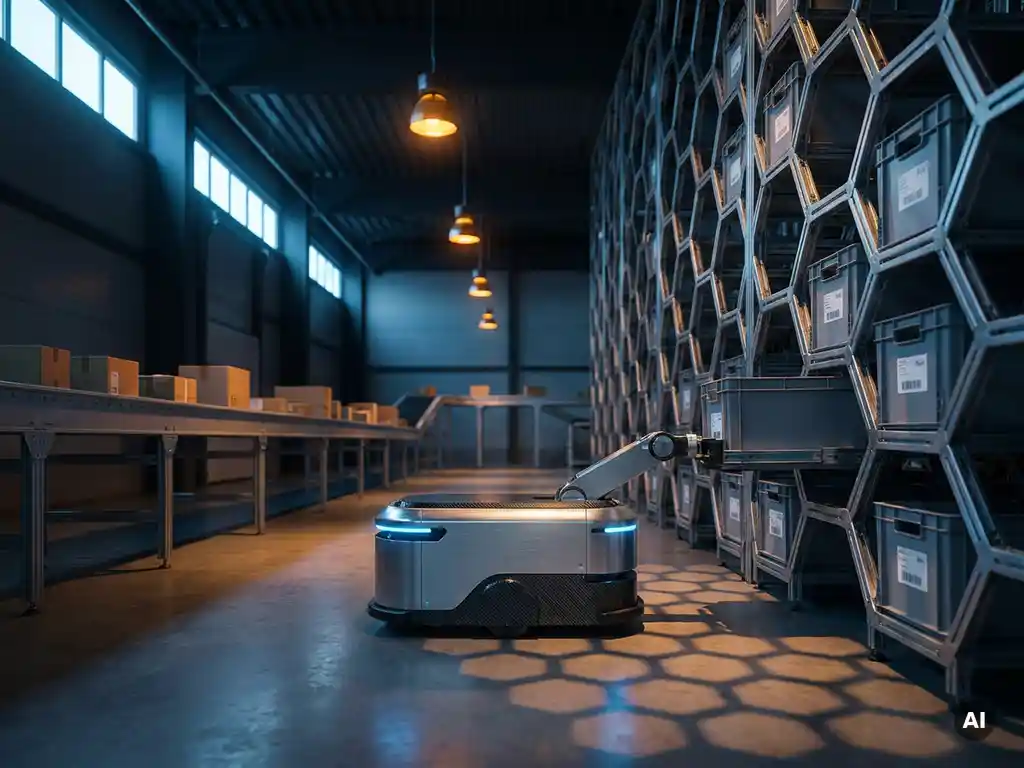
Automated systems handle returns processing in e-commerce fulfillment by routing returned items through a structured sequence of scanning, condition assessment, sorting, and restocking or disposal decisions, all without requiring manual intervention at each step. The core advantage is speed and consistency: automation removes the bottlenecks that make manual returns costly and slow. The sections below answer the most common questions about how this works in practice, from initial intake through integration with warehouse software.
What steps does an automated system follow when a return arrives?
When a return arrives, an automated system follows a defined intake sequence: the item is scanned at the receiving dock, its identity is confirmed against the original order, its condition is assessed, and it is then routed to the appropriate next destination, whether that is restocking, quarantine, refurbishment, or disposal. This sequence happens in one continuous flow with minimal human touchpoints.
The process typically begins at a receiving station where a barcode or RFID scan pulls up the return authorization and order history. This immediately tells the system what the item is, where it came from, and what return policy applies. From there, the item moves to a condition grading station, which may use camera-based inspection, weight verification, or a combination of sensor inputs to assess whether the product is resalable as new, requires repackaging, or cannot be restocked.
Once graded, the system routes the item automatically. Resalable goods move toward restocking. Items requiring repackaging are directed to a processing station. Damaged or unsalvageable goods are flagged for liquidation or disposal. Throughout this flow, every action is logged in real time, giving operations teams full visibility into return volumes, condition breakdowns, and processing times without needing to count or track items manually.
How does automation identify and sort returned items by condition?
Automated returns processing identifies and sorts items by condition using a combination of barcode or RFID scanning, machine vision cameras, weight sensors, and predefined grading rules configured in the warehouse management system. The system compares what it observes against expected product parameters to assign a condition grade and determine the correct handling path.
Machine vision is increasingly central to condition assessment. Cameras capture images of the returned item from multiple angles, and image recognition software checks for visible damage, incorrect items, or missing components. This is far more consistent than visual inspection by individual workers, whose assessments naturally vary based on experience, fatigue, and time pressure.
Weight verification adds another layer of accuracy. If a returned item weighs significantly less than expected, the system flags it as potentially incomplete before a human ever needs to open the box. Combined with scan data confirming the SKU, these checks together produce a reliable condition grade within seconds of the item arriving on the processing line.
Sorting then happens automatically. Conveyor diverters, robotic arms, or tote-routing logic direct each item to its designated lane based on the assigned grade. High-volume returns operations benefit particularly from this approach because the system maintains consistent throughput even when return volumes spike, which is a common challenge after peak selling periods.
How does automated storage and retrieval fit into returns restocking?
Automated Storage and Retrieval Systems play a direct role in returns restocking by providing a fast, accurate mechanism for putting inspected and graded items back into inventory locations. Once a returned item is confirmed as resalable, an AS/RS can receive it at a Goods-to-Person workstation and store it in the correct location immediately, making it available for the next outbound order without delay.
The speed of restocking matters in e-commerce fulfillment because a returned item sitting in a processing queue is effectively lost inventory. Every day it is not stored and available for picking represents a missed selling opportunity. Automated storage eliminates the manual steps of locating an open slot, transporting the item there, and updating the inventory record by hand, all of which introduce delays and errors in traditional warehouse setups.
A high-density AS/RS architecture also handles the variability of returned goods well. Returns rarely arrive in predictable quantities or SKU mixes, and a system with direct access to every storage location, without needing to reshuffle surrounding inventory, can absorb returned items into existing stock positions without disrupting the layout or slowing outbound picking. This is especially relevant for operations with large SKU catalogs where returned items may need to be slotted into locations spread across the storage structure.
For operations running autonomous AS/RS technology, the ability to add robots as throughput demands grow means that returns processing peaks, such as those following major sales events, can be absorbed without rebuilding or reconfiguring the storage infrastructure itself.
What’s the difference between manual and automated returns processing?
The key difference between manual and automated returns processing is consistency and throughput at scale. Manual processing relies on individual workers to scan, inspect, grade, and route each item, which introduces variability in grading decisions, creates throughput ceilings tied to headcount, and makes it difficult to maintain accurate inventory records during high-volume periods. Automated processing applies the same rules to every item, every time, regardless of volume.
Speed and throughput
Manual returns processing is labor-intensive and time-bounded. Workers can only process a fixed number of items per hour, and that rate drops during peak periods when fatigue and volume pressure increase. Automated systems maintain consistent processing rates regardless of volume. Conveyor lines, robotic sorting, and automated storage can run continuously, which is particularly valuable in the days following major promotions or seasonal peaks when return volumes can multiply quickly.
Accuracy and consistency
Human graders make subjective judgments about item condition, and those judgments vary between individuals and across shifts. An automated system applies the same grading criteria to every item, which produces more consistent inventory records and reduces disputes over condition classifications. This consistency also makes it easier to analyze return patterns over time because the data reflects a uniform standard rather than a mix of individual assessments.
How do automated systems integrate with warehouse management software during returns?
Automated returns processing systems integrate with warehouse management software through standard APIs and event-driven data exchanges. When a return is scanned and processed, the automation layer sends real-time updates to the WMS covering item identity, condition grade, assigned storage location, and inventory status. This keeps the WMS inventory record accurate without requiring manual data entry at any point in the returns flow.
The integration works in both directions. The WMS provides the automation system with return authorization data, expected item details, and routing rules, while the automation layer feeds back actual processing outcomes. This bidirectional exchange means that if a return is graded as damaged and flagged for disposal, the inventory record is updated immediately rather than after a batch reconciliation at the end of the shift.
For operations using an AS/RS for storage, the WMS integration also governs where returned items are slotted. The system can apply slotting logic based on demand velocity, SKU family, or available capacity, ensuring that restocked returns are placed in positions that support efficient outbound picking. This closes the loop between the returns process and the forward fulfillment operation, treating returned inventory as a productive asset rather than a processing problem.
Modern automation platforms are designed with open API architectures precisely to simplify this kind of integration. Rather than requiring custom middleware for every connection, standard interfaces allow the returns automation layer to communicate with existing WMS platforms, order management systems, and ERP systems without major IT projects.
When does investing in returns automation make operational sense?
Investing in returns automation makes operational sense when return volumes are high enough that manual processing creates measurable bottlenecks, when inconsistent grading is affecting inventory accuracy or customer satisfaction, or when the labor cost of manual returns handling is growing faster than the business can absorb. For most e-commerce operations, these conditions appear well before a company reaches enterprise scale.
Volume is the most straightforward trigger. When returns processing requires dedicated headcount that fluctuates with seasonal demand, the cost of staffing up and down for peaks becomes a recurring operational burden. Automation converts that variable cost into a more predictable infrastructure investment and removes the dependency on finding and training temporary workers during the periods when return volumes are highest.
Inventory accuracy is a second driver. If returned items are sitting in a processing backlog rather than being restocked quickly, the gap between physical inventory and system inventory grows. This leads to overselling, stock discrepancies, and customer service issues that compound over time. Automation closes that gap by processing and restocking returns faster and with greater accuracy.
A third consideration is the complexity of the returns catalog. Operations handling a wide range of SKUs with different condition grading rules benefit more from automation than those handling a narrow, uniform product range. The more complex the grading logic, the more valuable it is to encode that logic into a system rather than relying on individual workers to apply it consistently across thousands of items per day.
How Hexxabotics helps with automated returns processing
Hexxabotics provides a high-density AS/RS architecture that directly supports the restocking and storage side of e-commerce returns processing. The system is designed to handle the unpredictability and volume variability that returns create, without requiring infrastructure changes as demands shift.
- Direct access to every storage location: Returned items can be restocked immediately into any available position without reshuffling surrounding inventory, eliminating the delays that slow returns-to-shelf cycles.
- Independent throughput scaling: Additional Hexxabots can be added to increase processing throughput during returns peaks without modifying the storage structure itself.
- Goods-to-Person workstation integration: Returned totes are retrieved and delivered directly to processing stations, keeping operators productive without manual travel through the warehouse.
- WMS integration via standard APIs: The Hexxabotics Control System connects to existing warehouse management platforms, ensuring that restocked returns are reflected in inventory records in real time.
- No in-rack electrification: The passive rack structure simplifies maintenance and reduces failure points, supporting the consistent uptime that high-volume returns processing requires.
If returns processing is creating inventory backlogs or throughput bottlenecks in your fulfillment operation, explore how the Hexxabotics AS/RS architecture can support a faster, more accurate reverse logistics workflow. Learn more about the system and how it scales with your operation.