
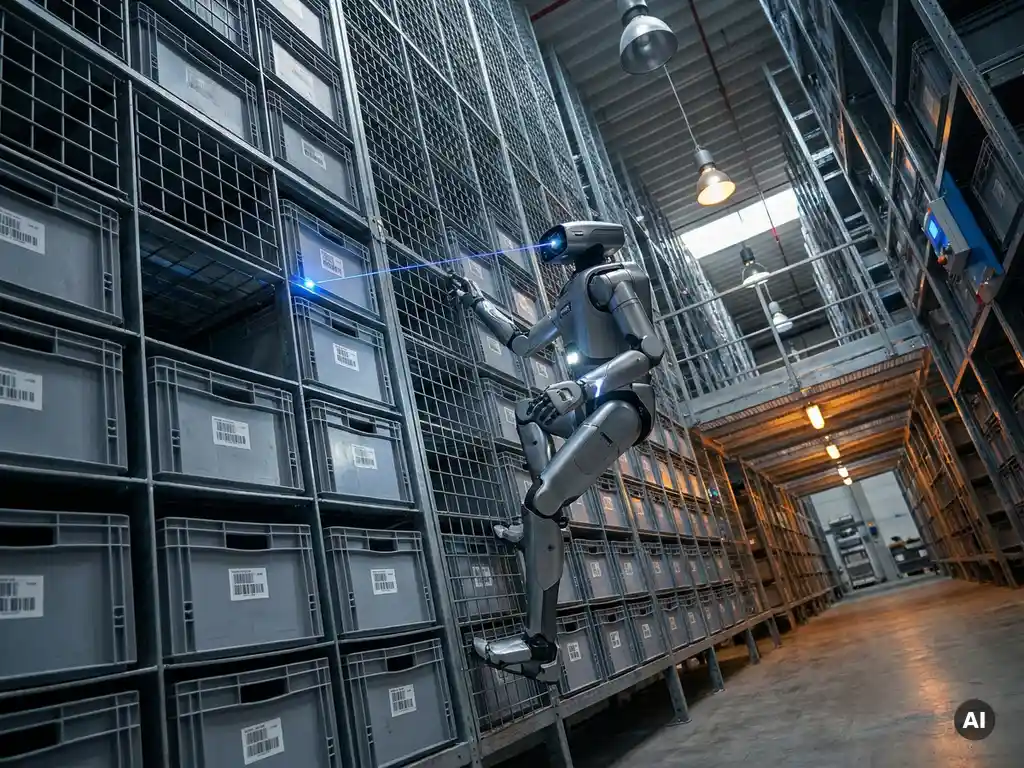
Implementing track-and-trace in an existing warehouse means adding systems that record the movement, location, and identity of every inventory unit from receipt through dispatch. The core requirement is capturing a reliable, timestamped event at every point where inventory changes state or location. Most warehouses can implement meaningful traceability without replacing their entire infrastructure, though the right approach depends on how tightly regulated the product category is and how much automation already exists.
What data does track-and-trace actually need to capture in a warehouse?
A warehouse track-and-trace system needs to capture four core data points for every inventory movement: what moved (product identity, SKU, batch or lot number), where it moved (origin and destination location), when it moved (timestamp), and who or what initiated the movement (operator ID, robot ID, or automated trigger). Without all four, traceability records have gaps that make investigations and compliance audits unreliable.
For regulated industries, the data requirements go further. Pharmaceutical and healthcare distribution environments typically need to capture expiry dates, batch numbers, and serial identifiers at the unit level. This supports First Expired First Out (FEFO) retrieval logic and makes it possible to isolate affected inventory quickly if a product recall is issued. In those contexts, traceability is not just an operational convenience but a regulatory obligation.
Beyond the core movement events, a complete warehouse traceability record should also include inbound receipt confirmations, putaway confirmations, pick events, replenishment events, and outbound dispatch records. Each of these represents a point where inventory changes state, and each is a potential gap if it goes unrecorded. The richer the event log, the faster root cause analysis becomes when stock discrepancies or customer claims arise.
What are the main technologies used for warehouse track-and-trace?
The main technologies for warehouse track-and-trace are barcodes, 2D codes (QR/Data Matrix), RFID, and automated scanning integrated into conveyor or storage systems. Barcodes and 2D codes remain the most widely deployed because they are low cost, universally readable, and compatible with virtually every warehouse management system. RFID offers hands-free, bulk-read capability but requires more infrastructure investment and is most justified where scan rates are very high or manual scanning is impractical.
Barcode and 2D code scanning
Fixed scanners at dock doors, conveyor choke points, and pick stations capture movement events automatically without requiring operator action at every step. Handheld scanners give operators flexibility for putaway and exception handling. 2D Data Matrix codes are increasingly standard in pharmaceutical packaging because they can encode batch, expiry, and serial data in a compact format, making them the preferred carrier for traceability data in regulated supply chains.
RFID
RFID readers can interrogate multiple tags simultaneously, which makes them effective at dock doors where entire pallets or totes move through at once. The technology reduces manual scan effort and improves read reliability in high-throughput environments. However, RFID tags cost more per unit than printed labels, and some product categories, particularly those with metallic packaging or liquid content, present read-rate challenges that require careful antenna placement and testing before deployment.
Automation-integrated scanning
In systems where totes or containers move through automated storage and retrieval infrastructure, scanning can be embedded into the handling process itself. Every retrieval, putaway, and transfer event is logged by the control system without requiring a separate scan step. This approach delivers the most complete and reliable event capture because it removes human action as a dependency at the point of recording.
How do you retrofit track-and-trace into a warehouse that wasn’t designed for it?
Retrofitting track-and-trace into an existing warehouse starts with identifying the critical event points where inventory changes state, then adding scanning infrastructure at those points rather than attempting to instrument every square metre of the facility at once. A phased approach, beginning with inbound receiving and outbound dispatch, captures the highest-value traceability data first while limiting disruption to live operations.
The practical sequence for retrofitting inventory tracking in an existing warehouse typically looks like this:
- Audit current data capture: Identify where inventory movements are already recorded and where they are not. Manual processes, paper records, and verbal confirmations are the most common gap sources.
- Define the minimum required event set: Decide which events must be captured to satisfy operational needs and any regulatory requirements. Avoid over-engineering the initial scope.
- Install scanning at choke points: Dock doors, conveyor entry and exit points, and pick stations are natural bottlenecks where every unit passes through. Fixed scanners at these locations capture events without requiring changes to storage layout.
- Label existing inventory: Apply barcodes or 2D codes to totes, pallets, and locations that are not already labelled. Location labelling is often overlooked but is essential for meaningful movement records.
- Connect to the WMS: Ensure every scan event writes a record to the warehouse management system in real time. Batch uploads create time gaps that undermine traceability.
- Train operators and establish exception processes: A track-and-trace system is only as complete as its weakest scan point. Operators need to understand why every scan matters, and there must be a clear process for handling unreadable labels or missed scans.
One of the most common retrofit mistakes is treating labelling as a secondary task. Locations, totes, and products all need machine-readable identifiers before any scanning infrastructure can produce useful records. Addressing the labelling gap early prevents the scanning hardware from being installed and then sitting idle because the inventory it is meant to track carries no readable identifier.
How does track-and-trace integrate with a warehouse management system?
Track-and-trace integrates with a warehouse management system by writing a timestamped event record to the WMS every time a scan or automated movement confirmation occurs. The WMS then uses those events to update inventory location, quantity, and status in real time. Integration is typically achieved through direct API connections, middleware, or a Warehouse Execution System (WES) that sits between the scanning infrastructure and the WMS.
The quality of the integration determines whether traceability is genuinely real-time or only approximately accurate. A WMS that receives scan events via a direct API call updates inventory records within seconds of a physical movement. A system that relies on periodic batch file imports may show inventory in a location it left hours ago, which creates exactly the kind of data gap that traceability is meant to prevent.
For operations running multiple automation technologies alongside manual zones, a WES or orchestration layer becomes important. It coordinates event streams from different systems, including automated storage and retrieval units, conveyor scanners, and handheld devices, into a single inventory record within the WMS. Without that orchestration, each technology produces its own event log, and reconciling them manually is time-consuming and error-prone.
Standard API formats and protocols have made warehouse management system integration significantly more straightforward than it was a decade ago. Most modern scanning hardware and automation platforms publish events in formats that WMS platforms can consume directly, reducing the need for bespoke middleware. The key integration requirement to confirm before deployment is whether the WMS can receive and process events at the expected transaction rate without queuing delays that would make the inventory record lag behind physical reality.
What causes track-and-trace data gaps and how can they be fixed?
Track-and-trace data gaps are caused by missed scans, unreadable labels, manual movements that bypass scanning infrastructure, and time delays between physical events and system recording. The most common source in practice is a movement that happens outside the designed process flow, such as an operator relocating a tote to resolve a congestion problem without scanning it out and in.
The fixes are both technical and procedural:
- Missed scans: Add confirmation logic to the WMS so that a movement cannot be completed in the system without a corresponding scan. If the scan is missing, the system flags an exception rather than silently accepting an incomplete record.
- Unreadable labels: Establish a label quality standard at inbound receiving and replace damaged labels before products enter storage. A label that cannot be scanned at the pick stage creates a traceability break that is difficult to reconstruct retrospectively.
- Off-process movements: Design the physical layout so that moving inventory without passing a scanner requires deliberate effort. Choke points at aisle entrances and conveyor entry points reduce the likelihood of inventory bypassing the scan infrastructure accidentally.
- Batch upload delays: Replace batch file imports with real-time API event feeds wherever the WMS supports it. Time gaps in the inventory record are one of the most consistently underestimated sources of traceability failure.
- Manual zones with no scanning: Audit every zone where inventory can be handled and ensure each has at least a handheld scanner and a process that requires its use. Manual zones are the most common location for data gaps in partially automated warehouses.
Periodic gap analysis is also valuable. Comparing physical stock counts against WMS records at the location level, rather than just the total quantity level, reveals where movements are being lost. A location that consistently shows discrepancies between physical and system counts is a reliable indicator of a scan point that is being bypassed in practice.
When does track-and-trace require a full AS/RS rather than manual scanning?
A full Automated Storage and Retrieval System becomes necessary for track-and-trace when the volume of movements is too high for reliable manual scanning, when the product category requires guaranteed retrieval logic such as FEFO or batch selection, or when regulatory requirements demand an unbroken automated audit trail that human processes cannot consistently deliver. Manual scanning works at moderate throughput levels but introduces increasing error risk as transaction rates rise.
The clearest indicators that manual scanning is no longer sufficient include:
- Scan compliance rates falling below acceptable thresholds despite training and process enforcement
- Recurring stock discrepancies that cannot be traced to a specific event because movements went unrecorded
- Inability to reliably execute FEFO retrieval because the system cannot guarantee which physical unit an operator will pick
- Audit findings that require evidence of automated, tamper-evident event records rather than operator-confirmed scans
- Transaction volumes that require more scanning activity than available staff can perform without creating a throughput bottleneck
In pharmaceutical distribution, the combination of batch traceability, expiry management, and regulatory inspection requirements often reaches this threshold before throughput alone would justify automation. The risk of a traceability failure in a regulated environment, whether a missed batch recall or an inability to demonstrate FEFO compliance, creates a compliance exposure that manual processes struggle to eliminate entirely at scale.
An AS/RS with direct-access architecture addresses this by embedding the traceability event into the retrieval mechanism itself. Every tote location is known to the control system, every retrieval is a logged event, and the system can enforce retrieval logic based on batch, expiry date, or order priority without depending on operator judgment at the point of pick. The result is a traceability record that is complete by design rather than complete by discipline.
How Hexxabotics supports warehouse traceability and track-and-trace compliance
Hexxabotics is built around a direct-access AS/RS architecture that makes reliable track-and-trace a structural outcome rather than a process discipline problem. Key capabilities relevant to warehouse traceability include:
- Every tote location is individually known and directly accessible: no digging, no reshuffling, and no ambiguity about which physical unit the system will retrieve
- Every storage and retrieval event is logged by the control system, creating an automated audit trail without relying on operator scanning compliance
- Direct-access architecture supports batch and expiry-driven retrieval logic, making FEFO and batch-controlled workflows technically enforceable rather than operator-dependent
- Standard API integration connects the Hexxabotics Control System to existing WMS, WES, or WCS platforms, so traceability events flow into the broader inventory record in real time
- Independent capacity and throughput scaling means the traceability infrastructure grows with the operation without requiring a redesign of the storage structure
For pharmaceutical distributors, healthcare logistics providers, and any operation where pharmaceutical storage compliance is a core requirement, the combination of dense automated storage and embedded event capture removes the most common sources of traceability gaps. If your current manual or semi-automated approach is producing data gaps that audits or customer claims are exposing, contact Hexxabotics to discuss how a direct-access AS/RS can be designed around your specific inventory profile and compliance requirements.
Related Articles
- How do you prevent cross-contamination in pharmaceutical storage facilities?
- What is the role of serialization in preventing drug counterfeiting?
- How do you train warehouse staff on pharmaceutical compliance requirements?
- Should you lease or buy warehouse automation equipment?
- Can warehouse automation lower your energy consumption?