
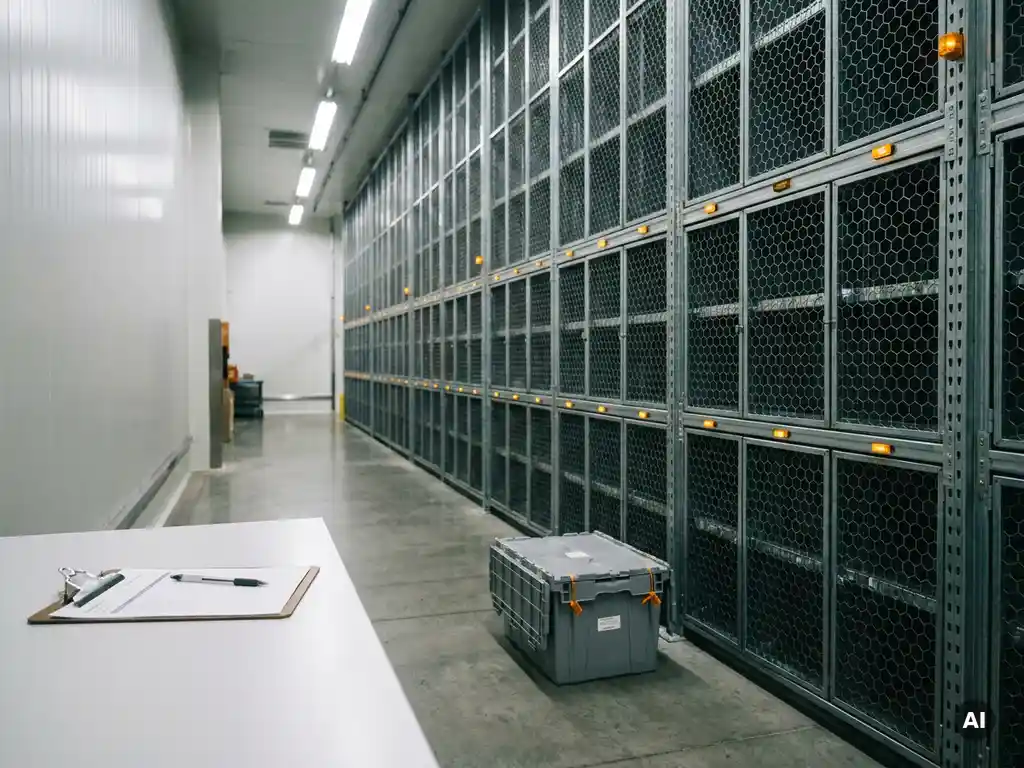
Pharmaceutical warehouse inspections fail most often because of documentation gaps, temperature control failures, and inadequate inventory traceability, not because of physical storage conditions alone. Regulatory bodies including the FDA, MHRA, and EMA treat procedural and record-keeping deficiencies as seriously as environmental violations, meaning a facility can have modern racking and still receive a critical finding. The questions below unpack the most common failure points, from what triggers an inspection to how automated storage systems help reduce compliance risk.
What triggers an unannounced pharmaceutical warehouse inspection?
Unannounced pharmaceutical warehouse inspections are typically triggered by consumer complaints, adverse event reports, product recalls, whistleblower notifications, or routine risk-based scheduling by regulatory authorities such as the FDA or MHRA. Any signal that a facility may be handling, storing, or distributing product outside approved conditions can prompt an immediate visit without prior notice.
Regulatory agencies use risk-based inspection programs that assign facilities a compliance score based on inspection history, product type, and reported incidents. A facility that has previously received major or critical findings, or one that handles high-risk products such as controlled substances, biologics, or temperature-sensitive medicines, is more likely to be placed on an accelerated inspection schedule.
Import alerts are another common trigger. If a shipment arriving at a port of entry fails testing or documentation review, regulators may trace the issue back to the originating distribution facility and initiate an inspection. Similarly, a supplier audit that surfaces concerns about a downstream distributor can escalate into a formal regulatory visit. The practical implication is that pharmaceutical warehouses and distributors should treat compliance as a continuous operational state, not a preparation exercise performed before scheduled audits.
What are the most cited GMP violations found in warehouse audits?
The most frequently cited Good Manufacturing Practice violations in pharmaceutical warehouse audits relate to inadequate standard operating procedures, poor personnel training records, insufficient pest control documentation, improper segregation of quarantined or rejected stock, and failure to maintain complete batch traceability records. These procedural failures consistently appear across FDA Warning Letters and GDP inspection reports.
Inspectors place particular emphasis on whether written procedures reflect actual practice. A facility may have well-written SOPs on paper, but if staff cannot demonstrate that those procedures are followed consistently and that training is current and documented, the gap itself constitutes a violation. This is sometimes described as the “say what you do, do what you say” principle of GMP compliance.
Segregation failures are another recurring theme. Expired, damaged, or recalled product stored in proximity to releasable inventory without clear physical or system-level separation is a finding that inspectors flag repeatedly. In facilities where inventory control depends heavily on manual processes, the risk of co-mingling is structurally higher. Batch and lot traceability gaps also generate significant findings, particularly where the facility cannot demonstrate a complete chain of custody from receipt through to dispatch.
How do temperature and humidity failures lead to inspection findings?
Temperature and humidity failures lead to pharmaceutical warehouse inspection findings when a facility cannot demonstrate that storage conditions have remained within approved limits throughout a product’s time in the facility. Inspectors look for continuous monitoring records, calibrated equipment, documented deviation investigations, and evidence that out-of-range events were assessed for product impact and reported appropriately.
A single temperature excursion does not automatically result in a critical finding. What regulators assess is whether the facility detected the excursion promptly, investigated its cause, evaluated whether affected product remained suitable for release, and took corrective action to prevent recurrence. A facility that experienced an excursion but documented a thorough investigation and implemented a credible corrective action is in a materially better position than one that experienced the same excursion but has no record of it.
Common environmental compliance failures include:
- Monitoring equipment that is out of calibration or has lapsed calibration certificates
- Gaps in continuous temperature logging where data recorders were offline or not replaced
- Absence of a formal deviation procedure for out-of-specification events
- Inadequate mapping studies that do not cover seasonal temperature variation or worst-case loading conditions
- Failure to assess products stored near loading docks, external walls, or HVAC vents where temperature variation is greatest
Humidity is less universally regulated than temperature, but for moisture-sensitive products and certain active pharmaceutical ingredients, humidity excursions carry equivalent compliance weight. Facilities handling such products are expected to demonstrate the same level of monitoring rigor applied to temperature control.
Why do documentation gaps cause more failures than physical storage issues?
Documentation gaps cause more pharmaceutical warehouse inspection failures than physical storage problems because regulators cannot verify compliance with anything they cannot see in writing. From a GMP and GDP perspective, an undocumented action is treated as an action that did not occur. A facility with impeccable physical conditions but incomplete records will receive findings; a facility with documented deviations and thorough investigations may receive fewer or less severe ones.
This reflects a fundamental principle of pharmaceutical regulation: the burden of proof lies with the facility. Inspectors do not assume compliant behavior in the absence of evidence. They assess what the records demonstrate. When batch records are incomplete, when temperature logs have unexplained gaps, when training records are missing for personnel who handle regulated product, or when change control documentation cannot be located, each gap becomes a finding in its own right regardless of what actually happened in practice.
Documentation failures also compound. A single missing record in a chain of custody can invalidate the traceability of an entire batch. In pharmaceutical distribution, where lot-level traceability is a regulatory requirement in most jurisdictions, the inability to reconstruct the complete movement of a product from receipt to dispatch is treated as a serious systemic failure rather than a clerical oversight.
The practical lesson for warehouse operations teams is that documentation discipline must be embedded into daily workflow rather than treated as an audit preparation activity. Systems that automatically generate records at each storage and retrieval event reduce the manual documentation burden and close the gaps that arise when staff are under pressure or operating at high throughput.
What’s the difference between a critical, major, and minor inspection finding?
A critical inspection finding is one that poses an immediate risk to patient safety or product quality, or indicates a serious breach of GMP that could result in harm. A major finding is a significant deviation from requirements that may affect product quality but does not present an immediate danger. A minor finding is a departure from best practice that does not substantially affect product quality or patient safety but still requires corrective action.
The distinction matters because regulatory consequences differ substantially across these categories.
Critical findings
Critical findings can result in immediate product recall, import alerts, facility shutdown orders, or criminal referrals depending on the jurisdiction and severity. Examples include deliberate falsification of records, failure to quarantine potentially contaminated product, or distributing product without release authorization. A critical finding almost always triggers follow-up inspection and requires a comprehensive corrective and preventive action (CAPA) response within a short timeframe.
Major and minor findings
Major findings typically require a formal written response and CAPA plan submitted within a defined period, often 15 to 30 days depending on the regulatory body. Repeated major findings across inspection cycles can be upgraded in severity or result in escalated regulatory action. Minor findings require acknowledgment and corrective action but generally carry less immediate consequence. However, inspectors track minor findings across inspection cycles, and a pattern of recurring minor violations in the same area is frequently reclassified as a major finding at the next inspection.
How can automated storage systems reduce pharmaceutical inspection risk?
Automated storage systems reduce pharmaceutical inspection risk by replacing manual inventory handling with system-controlled processes that generate complete, time-stamped records at every storage and retrieval event. This closes the documentation gaps that most commonly drive inspection findings, while also reducing the human error that contributes to segregation failures, mis-picks, and traceability breaks.
Direct-access automated storage architectures are particularly relevant in pharmaceutical distribution because every storage location is individually addressable without disturbing surrounding inventory. This supports lot-level and batch-level control: the system can retrieve a specific lot without moving or exposing other product, which is important for FEFO (First Expired, First Out) compliance and for isolating product under quarantine or investigation.
The compliance benefits of automated storage in pharmaceutical warehouses include:
- Automatic record generation: Every put-away, retrieval, and movement event is logged by the control system, eliminating manual documentation gaps
- Batch and lot traceability: System-level inventory control maintains a complete chain of custody for each lot from receipt to dispatch
- Segregation enforcement: Quarantined, expired, or rejected stock can be system-locked, preventing unauthorized retrieval without physical relabeling or manual barriers
- FEFO compliance support: Automated systems can be configured to prioritize retrieval by expiry date, reducing the risk of expired product entering the fulfillment flow
- Audit trail availability: Inspectors can review complete transaction histories without relying on manual log books or staff recollection
It is important to note that the storage hardware alone does not confer regulatory compliance. Compliance depends on the complete implementation, including the software layer, validation documentation, operating procedures, and environmental controls. The recommended framing for automated storage in a pharmaceutical context is that it supports batch traceability and regulated workflows rather than that it is independently GMP or GDP certified.
How Hexxabotics helps reduce pharmaceutical warehouse inspection risk
Hexxabotics offers a high-density AS/RS system designed to support the operational and compliance demands of pharmaceutical distribution. For warehouse managers and automation engineers working in regulated environments, the system addresses several of the root causes behind common inspection failures:
- Direct-access architecture: Every tote and lot is individually retrievable without digging through surrounding inventory, supporting strict lot segregation and FEFO-oriented workflows
- System-level inventory control: The Hexxabotics Control System logs every storage and retrieval event, creating the automatic audit trail that manual operations struggle to maintain consistently
- Scalable capacity without infrastructure redesign: Capacity and throughput can be scaled independently, allowing pharmaceutical distributors to grow SKU counts and order volumes without rebuilding their compliance infrastructure from scratch
- Integration with WMS and WES layers: Standard API integration connects the storage system to existing warehouse management and execution systems, enabling coordinated inventory control across the full fulfillment operation
- Compact, high-density footprint: The hexagonal vertical storage structure maximizes cubic space utilization, which is particularly valuable in temperature-controlled environments where conditioning costs increase with volume
If your facility is evaluating how automated storage can strengthen your pharmaceutical compliance posture, contact the Hexxabotics team to discuss your specific operational requirements and how the system can be configured to support your regulatory environment.
Related Articles
- What technology is used for real-time pharmaceutical inventory monitoring?
- What is serialization in pharmaceutical supply chain management?
- What are the controlled substance storage requirements for warehouses?
- What is the difference between an AMR and a traditional shuttle system?
- What are the benefits of autonomous mobile robots in warehousing?